Rhythms
A library of rhythms
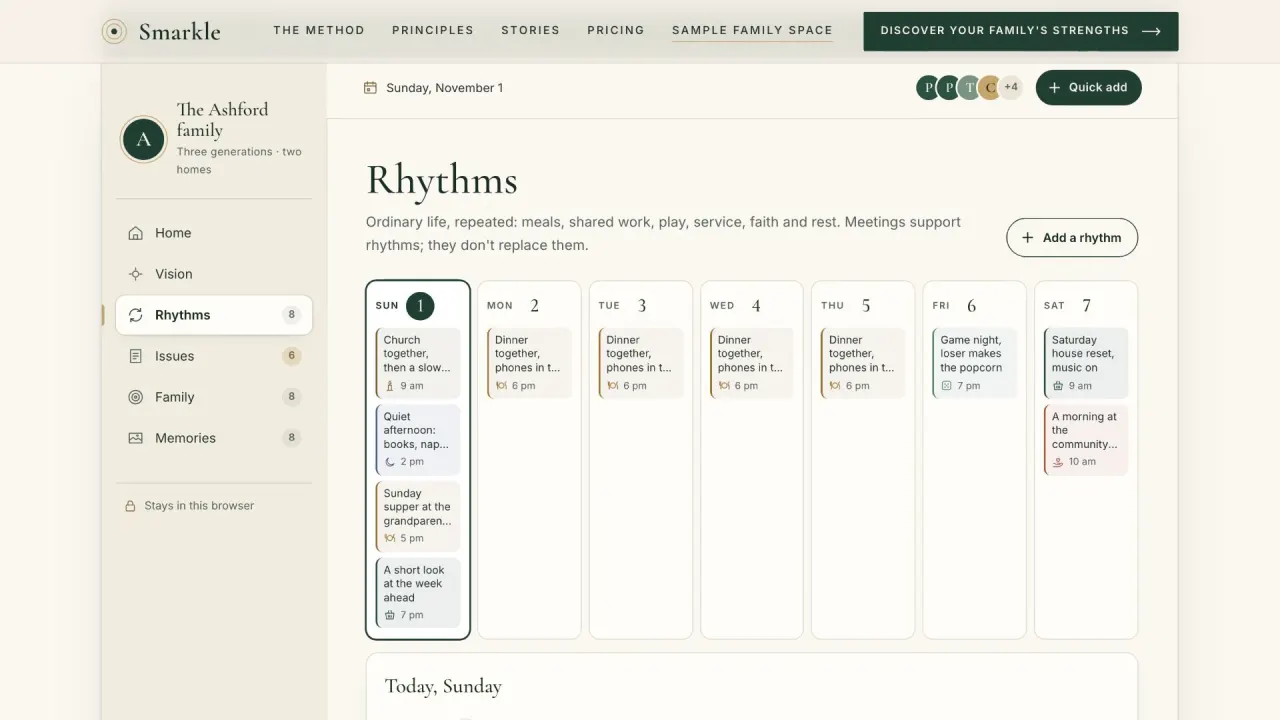
Real rhythms that families keep, from two minutes at breakfast to one day a year. Browse them, choose one, and keep it.
The rhythms part of the method is the why: how a beat set on purpose becomes your family's heartbeat. This page is the what. Start with one.


Before you choose
As little structure as works.
Use the least structure that reliably gives your family the life you want. At first a rhythm is set on purpose: someone picks the night, guards it and gathers everyone. Once it holds, it stops needing a champion. It's simply how you do things, and you can stop managing it. A rhythm is a possibility until it has a night and a time. Then it's a promise.
Start with one
Most families begin with one or two. Name a beat you already half keep, and protect it this week.
Fit your season
The schedule can change; the principle can't. A home full of toddlers and a home full of teens won't keep the same beats, and shouldn't.
Let go when it stops helping
Don't keep score, and don't carry guilt when a week goes sideways. When a rhythm stops serving your family, set it down and try another.
To every thing there is a season, and a time to every purpose under the heaven.
Ecclesiastes 3:1
How to read a rhythm
Every rhythm is tagged with the way you gather and who it's for. No single gathering has to do everything.
The way you gather
- PlanThink together
Short, for a real purpose, and only as often as it helps.
- WorkShoulder to shoulder
Real projects and busy hands. Some of the best talks happen here.
- CelebrateBelong together
Food, story, play. No business and no issues list.
- SabbathRest together
One day set apart for rest, worship and family. Nothing to fix.
Who it's for
- Whole family
- A marriage
- One parent and one child
- Grandparents
The library
From the smallest beat to the largest
Small beats every day keep people close. Larger beats each week and month make room for what can't be rushed. A few big beats each year remind everyone what it's all for.
Narrow the library
Showing every rhythm.
Nothing in the library matches both. Try another pairing.
Daily
Small beats that keep people close.
And thou shalt teach them diligently unto thy children, and shalt talk of them when thou sittest in thine house, and when thou walkest by the way, and when thou liest down, and when thou risest up.
Deuteronomy 6:7
-
Dinner, phones in the basket
One table most nights: phones in a basket by the door, grace, and a turn for everyone to tell the day's high and low.
How to start
Protect the nights you already eat together, and put a basket by the door tonight. Nobody fixes anybody's low.
For: Whole family
-
Prayer that names real things
A short family prayer, morning or night, that names real people and real needs instead of the usual words.
How to start
Tonight, ask each person to name one person to pray for. Keep it short enough that nobody dreads it.
For: Whole family
-
Two minutes at breakfast
A quick look at the day while everyone eats: who needs a ride, who has a test, who could use a hand.
How to start
Ask one question over breakfast, “Who needs what today?”, and stop when it's answered.
For: Whole family
-
Work side by side
Real household work done together rather than assigned from a chart, until a teen sees the dishes and simply does them.
How to start
Choose one daily job and do it beside a child instead of handing it over. Teach as you go.
For: Whole family
-
The talk in the car
The drive to school or practice, radio down, where the real answers tend to come out.
How to start
Leave the radio off for one drive this week. Ask one open question, then wait longer than feels natural.
For: One parent and one child
-
Bedtime questions
Two questions at the edge of sleep: “What was the best part of today? The hardest?”
How to start
Ask both tonight, and listen to the second answer without fixing it.
For: One parent and one child
Weekly
Larger beats that make room for what can't be rushed, and one day kept apart.
Remember the sabbath day, to keep it holy.
Exodus 20:8
-
The Sabbath table
One long meal each week with every household, guests welcome: a blessing, one story, and the same songs for years.
How to start
Choose the day together and keep it to three things: a blessing, a story, a song. No correction and no logistics at this table.
For: Whole familyGrandparents
-
A blessing by name
Each week every child hears, by name, what a parent sees growing in them.
How to start
At the Sabbath meal, take one child at a time and say one specific thing you've seen. Brief is fine; specific is the point.
For: One parent and one child
-
Worship, then the grandparents' table
Church together, sitting side by side, then a slower supper with the grandparents, or a call on speaker when miles are in the way.
How to start
Ask the grandparents for one standing day, and keep it the same week after week until no one has to schedule it.
For: Whole familyGrandparents
-
A Saturday work morning
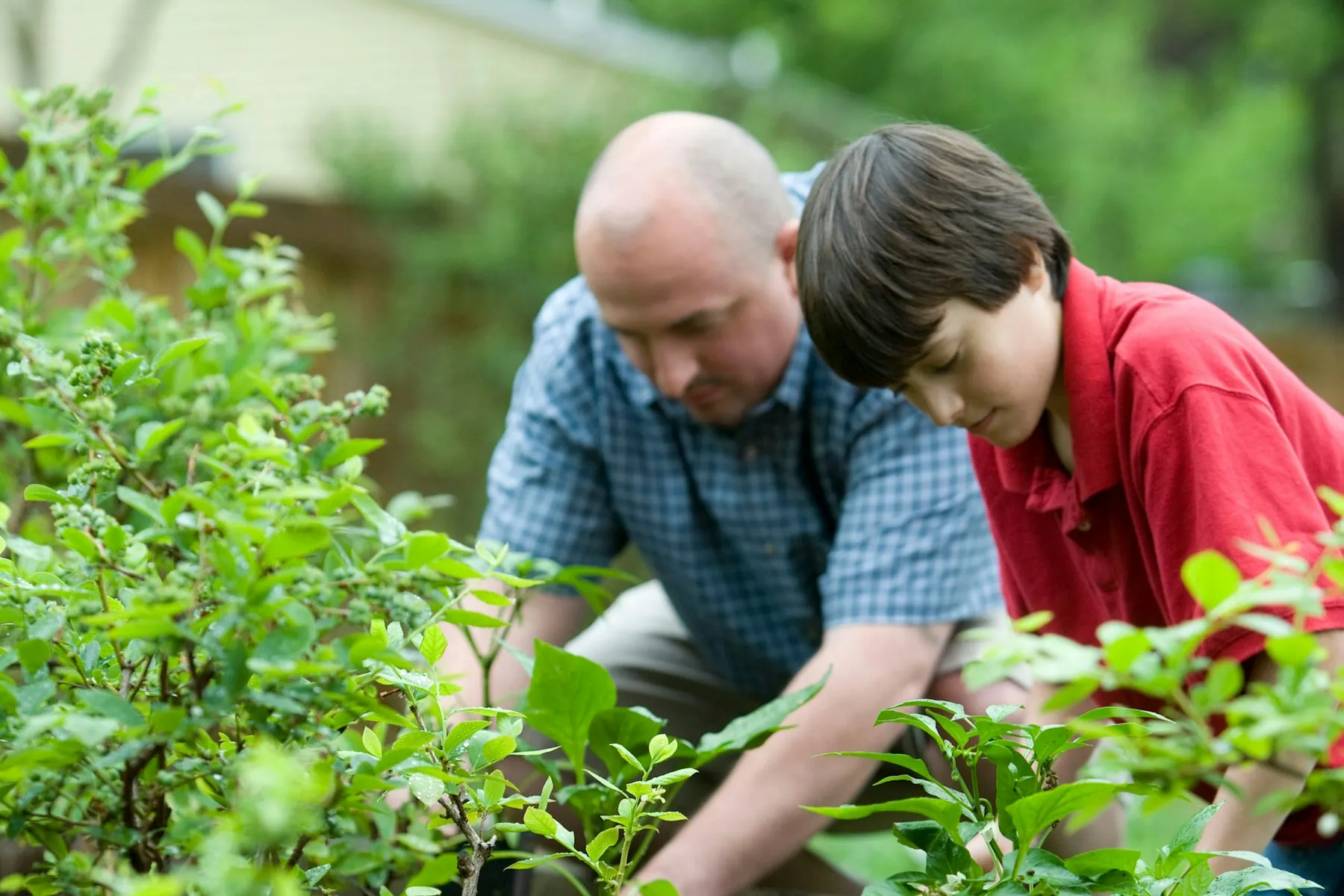
A few hours on one real shared project, such as the garden, a build, a clean-up or a neighbor's need. Music on, everyone in, lunch together after.
How to start
Choose one job this Saturday that takes all hands, and plan the lunch before you plan the work.
For: Whole family
-
The weekly plan
A short sitting and five questions: What's happening? Who needs help? Who owns what? Anything blocking? Anything to celebrate?
How to start
Pick a night when energy is fresh, ask the five questions, and stop when they're answered. Personal disagreements go to the people involved.
For: Whole family
-
The couple check-in
A short sit-down, often in the car: us, the kids, the week, and where we need help. Sometimes it's just “we're good.”
How to start
Next time you drive somewhere together, go through four words: us, kids, week, help.
For: A marriage
-
The ride-along
Every errand, jobsite visit or hardware-store run takes one child along, in turn. Time with each child that survives a real calendar.
How to start
Keep a simple order of whose turn is next. When an errand comes up, the next child comes. That's all.
For: One parent and one child
-
A Friday fire for the teens
A weekly fire, food and music for the teens and up, with cousins and friends welcome. The teens run it; the adults keep the food coming and stay close by.
How to start
Build the first fire yourself, then hand the evening over. Your job is the food and being nearby.
For: Whole family
-
Family night
One evening a week kept for nothing but each other: a game, a story, something everyone made.
How to start
Choose one evening and ask everyone to make something for it. When it has to move, move it; don't drop it.
For: Whole family
Monthly
Time you can count on, for the people who most need it.
Two are better than one; because they have a good reward for their labour.
Ecclesiastes 4:9
-
Date night
Two people remembering why they started, with the logistics left at home for one evening.
How to start
Before this one ends, put the next date on the calendar.
For: A marriage
-
A walk with one child
A one-on-one with no agenda: just the two of you and a path.
How to start
Ask yourself who you haven't spent real time with lately, and start there.
For: One parent and one child
-
A heart check
A few minutes with each person, once a month, to ask how they're really doing.
How to start
Begin with whoever is easiest to overlook, and listen for the answer under the answer.
For: One parent and one child
-
A morning of service
A morning spent for someone outside the house: a meal carried over, a yard cleared, a move made lighter.
How to start
Ask who near you is carrying something heavy this month, and offer them a morning.
For: Whole family
-
One family story a month
Record one family story each month, starting with the grandparents. Tell the real story, not a perfect one: children need heroes with scars.
How to start
Sit with a grandparent and ask one question, such as “What was the hardest year?” Record the answer, and tell it at the next Sabbath table.
For: Grandparents
-
The wider family gathering
Once a month the wider family comes together: grandparents, aunts and uncles, and the cousins.
How to start
Offer to host the first one, and keep it simple enough that someone else will want to host the next.
For: GrandparentsWhole family
Each season
Every few months, a longer look: who is thriving, and who might we be missing?
And let us not be weary in well doing: for in due season we shall reap, if we faint not.
Galatians 6:9
-
Who might we be missing?
A seasonal talk between parents about each person: who is thriving, who is lonely, who needs more responsibility, who needs less pressure.
How to start
Begin with one question: “Who is becoming invisible because they're easy?”
For: A marriage
-
The protected overnight
A night away for the two of you every season, set well ahead, protected, and never something earned by a crisis.
How to start
Set the date now and bring four questions: How are we? What's been good? Where did you feel far from me? What should we change?
For: A marriage
-
A season's project
One real project, start to finish: a garden, a build, the canning, helping someone move.
How to start
Choose a project with a finish line the youngest can see, and give everyone a real job in it.
For: Whole family
-
A seasonal adventure
Something on the calendar each season that everyone looks forward to: a hike, the lake, a ski day, a dance.
How to start
Put the next adventure on the calendar before the season fills up, and let the kids help choose it.
For: Whole family
-
The season's highlights
A look back through the season's photos and calendar: What were the highlights? Why do they matter? How can we build on them?
How to start
After dinner, pass the phone around and let each person choose one photo to tell about.
For: Whole family
Yearly
A few big beats that remind everyone what it's all for.
That this may be a sign among you, that when your children ask their fathers in time to come, saying, What mean ye by these stones?
Joshua 4:6
-
The annual reset
A few days away together, with one planning day: each spouse's own dreams first, then the marriage, then each child, then the plan.
How to start
Book the days, give just one of them to planning, and spend the rest simply living it.
For: A marriage
-
A new-year planning day
Once a year, the adults and older youth choose three to five family priorities for the year. That's it.
How to start
Bring what came out of your own planning day, choose no more than five priorities, then spend the rest of the day together.
For: Whole family
-
A birthday date
Every birthday, a date with a parent that grows with the child, starting a little earlier in the day each year.
How to start
On the next birthday, pick them up early and let them choose where you go.
For: One parent and one child
-
A year's goals, in their own words
Each birthday a child sets a few goals in their own words and looks back at last year's: did it, grew in it, carrying it forward, or letting it go.
How to start
Ask what they want to get better at this year, and write it down exactly as they say it. Nothing is ever marked as failed.
For: One parent and one child
-
The family build
Once or twice a year, the wider family takes on one real project together, like a barn raising: someone needs a barn, so everybody builds the barn.
How to start
Watch for the next real need in the wider family, and offer a Saturday with all hands.
For: Whole familyGrandparents
-
The summer campout
A yearly campout with the wider family: a fire circle, the same old stories and the same old games.
How to start
Choose the weekend in winter, so it's on every calendar before summer fills.
For: Whole familyGrandparents
-
An ancestor night
One evening a year for the family's ancestors: their names, their hard years, and the faith that carried them.
How to start
Choose one ancestor, gather what you know, and tell their story at the table.
For: Grandparents
-
The whole-truth question
Once a year each person answers one question in writing: “If you could tell the whole truth without risking anything, what would you tell us?”
How to start
Ask it once, read every answer without arguing or defending yourself, and thank each person.
For: Whole family
Rhythms serve people, not the other way around
We won't hand you a schedule to install, and we won't count anyone's attendance, at church or at dinner. When a rhythm stops helping, let it go.
The sabbath was made for man, and not man for the sabbath.
Mark 2:27
If you'd like a nudge
Three good places to begin
Choose one. Watch it take root before you add another. Culture changes slowly, over months, not weeks.
- The Sabbath table The one to keep if you keep nothing else. It needs no agenda and no forms.
- The ride-along Time with each child that doesn't depend on a calendar with room in it.
- The protected overnight Steady, protected time for a marriage, before anything is wrong.
Keep going
Children remember what happened again and again.
This is the day which the LORD hath made; we will rejoice and be glad in it.
Psalm 118:24

What could your family become?
The first step is seeing where you are. In a few minutes, find what's already strong, where there's room to grow, and one small practice to try this week. Your results are yours.
About 5 minutes · No email needed · Your answers stay on your device