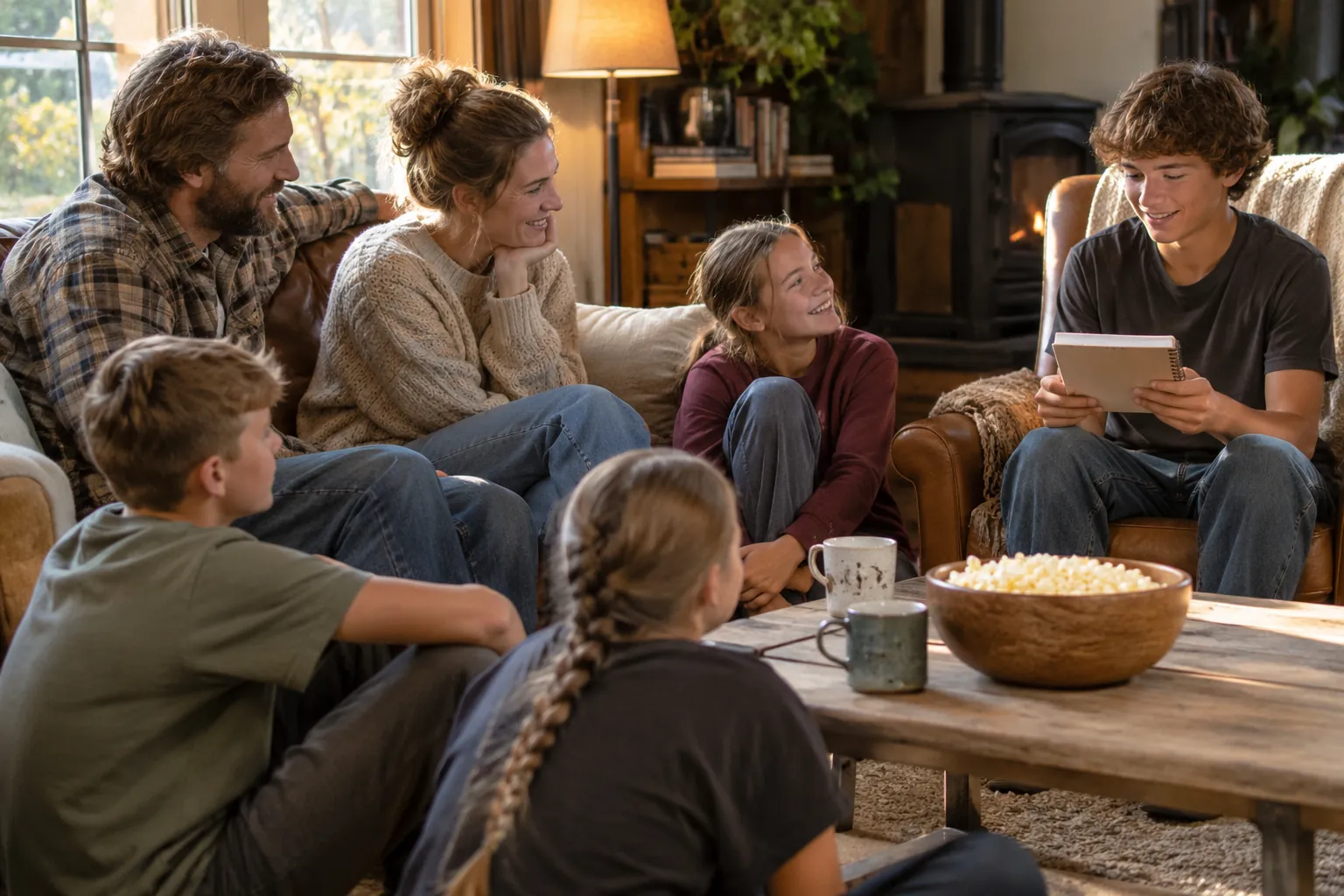
This is for parents who want to try a family meeting but worry it will turn into a lecture or an argument. Below is an agenda you can use tonight, a script for each part, ways to adjust it for small children and teenagers, and the mistakes that most often sink a first meeting.
What makes a family meeting work instead of feeling like a tribunal?
Many families try a meeting once, and it goes badly. A parent brings a list of complaints, children sit with folded arms, and everyone leaves feeling scolded. The family quietly decides that meetings are not for them.
The problem is usually the agenda, not the idea. A meeting built around grievances will always feel like a trial. A meeting built around the life of the family, what is coming, what we are carrying together, and what we are glad about, feels like belonging.
That is why the agenda below follows the same Plan · Work · Celebrate order every time. Problems still get named. They just are not the whole story.
The aim isn't a family without issues. It's a family where issues can be mentioned.
What is the agenda, step by step?
Print this, write it on a card, or simply keep it in your head. Five to ten minutes per part is plenty.
Open: appreciation
Go around the table. Each person names one thing someone else did this week that they appreciated. Parents go first to model it, and be specific: "I noticed you helped your brother find his shoes this morning without being asked."
Some children will say "nothing" the first time. That is fine. Move on warmly. By the third meeting, most of them will have something ready.
Plan: the days ahead
Walk through the coming week. Events, appointments, practices, visits, late nights. Ask, "Does anyone need anything from the rest of us this week?" A ride, quiet for studying, help with a project.
Work: responsibilities and one issue
First, check on shared jobs. Who is doing dishes, laundry, the pet, the bins? Let people trade and choose where they can.
Then raise one issue. Only one. It might be mornings that run late, the shared bathroom, or screen time before bed. Name it without blame: "Mornings have been rushed. What would help?" Ask the children for ideas first. Agree on something small to try for a week, and write it down so you can check on it at the next meeting.
Celebrate: something to enjoy
End with a treat, a game, or a plan for something fun later in the week. Some families close every meeting with the same dessert. Others take turns choosing a short activity. Many end with a family prayer or a simple blessing. The point is that the meeting finishes on a good note, every time.
What should we say? A script for the first meeting
The first meeting sets the tone. Here is a simple way to open:
"We are going to start having a short family meeting every week. It is not because anyone is in trouble. It is so we can plan together, share the load, and make sure we have fun on purpose. It will be short, and there will be dessert at the end."
When you raise the issue, try:
"Something that has been hard lately is bedtime. I am not upset with anyone. I would like us to figure it out together. What ideas do you have?"
And to close:
"Thank you for coming. Same time next week. Who wants to pick the dessert?"
Simple words, said calmly, do most of the work.
How do we adjust the agenda for different ages?
With toddlers and preschoolers, shorten everything. Appreciation can be a hug or a drawing. Skip the issue part, or keep it to one sentence. Let them choose the Celebrate activity from two options. Ten minutes is a long meeting for a three-year-old.
With children in the middle years, give roles. One can keep the agenda card and call each part. Another can write down the agreement from the issue. Children this age often love a gavel or a talking stone that shows whose turn it is.
With teenagers, the biggest change is voice. Let them raise an issue sometimes, including one about you. If a teenager says the rule about phones at dinner feels unfair, listen properly and treat it as a real item. A meeting where only parents can bring problems is not really a family meeting.
In a blended family or a home where children move between households, keep the meeting at a time when most people are present, and share a short summary with anyone who missed it. Nobody should feel the family carries on without them.
What are the common mistakes?
- Too many issues. One issue per meeting. More than that and the meeting becomes a list of failures.
- Discipline at the table. Never use the family meeting to correct one child in front of the others. Private matters belong in private conversations.
- Skipping Celebrate when time runs out. Cut the issue instead. The ending is what makes people want to come back.
- Parents deciding everything in advance. If the outcome is already settled, do not pretend to ask. Children notice, and trust drops.
- Meeting only when something is wrong. A meeting that appears only during trouble will always feel like trouble. The rhythm matters.
If a meeting goes badly, say so plainly next time: "Last week got tense. Let us try again." Families recover quickly when parents are honest.
Where Smarkle fits
Smarkle gives your family a calm, private place for the rhythms you keep and the issues you talk through. A weekly family meeting is a natural first rhythm, and the Plan · Work · Celebrate order above comes from the Smarkle method. The idea that issues are good, manageable and mentionable is explained on the issues page. If you want a gentle starting point, the family strengths assessment takes a few minutes and needs no email.