This is for parents who hear their mother's sharp voice coming out of their own mouth, or who promised themselves long ago that their children would grow up differently and now wonder how. It covers why old patterns return under stress, how to sort what to keep from what to leave behind, how to turn that into a direction, and what to do on the days you slip.
Why do old patterns come back even when you swore they wouldn't?
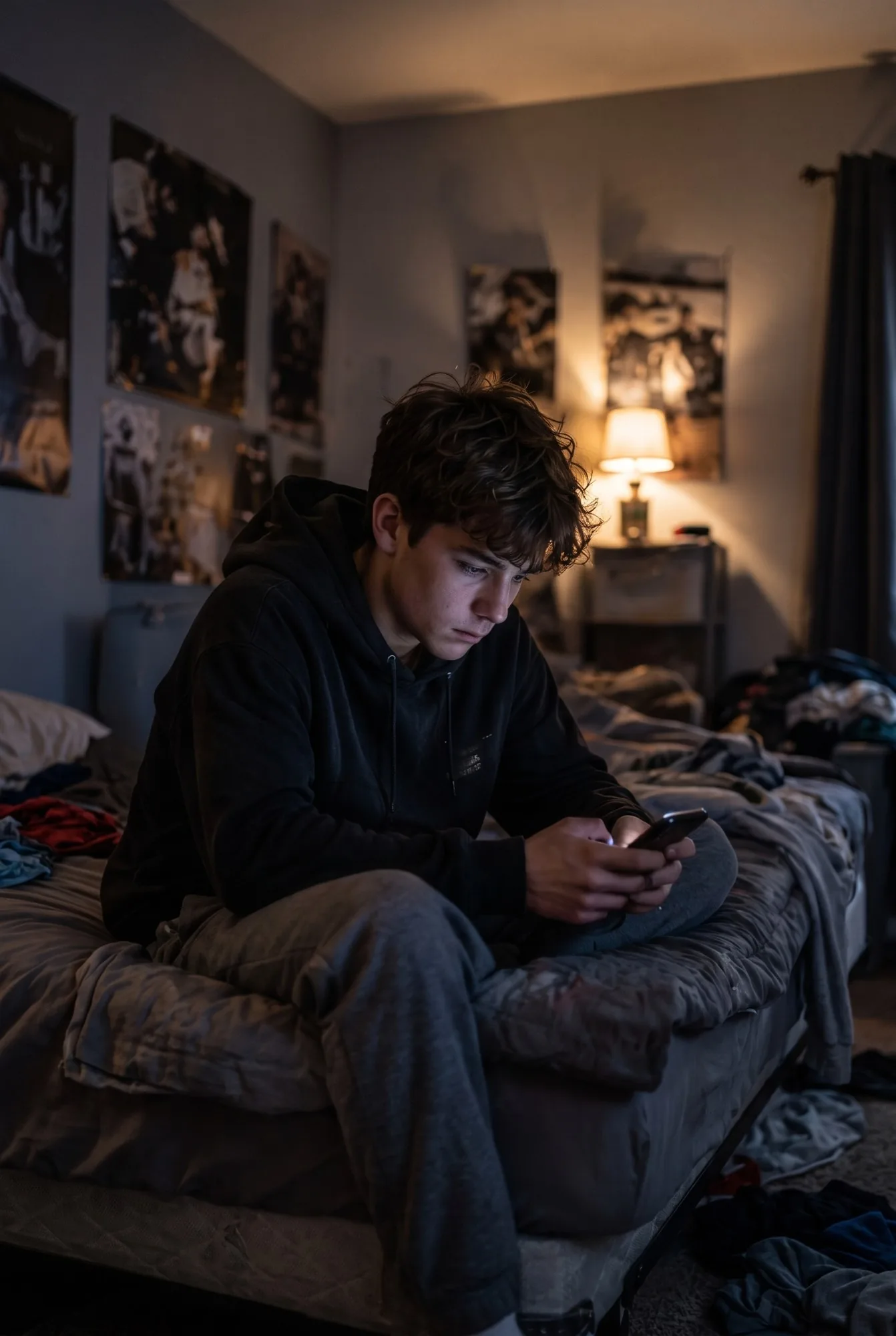
Because you learned them before you could choose them. The way your family handled anger, money, praise, silence and mess was the water you swam in. You absorbed it long before you could put words to it. So when you are tired, frightened or rushed, you do not reach for the parent you decided to be. You reach for the parent you watched.
That is not a moral failure. It is simply how habits work. Knowing what you do not want is a real start, but it leaves a gap. In the hard moment, "don't yell" gives you nothing to do instead. The pattern fills the gap because nothing else is there.
If your own childhood held real harm, such as violence, abuse or neglect, please be gentle with yourself and find a good counselor to walk with you. Some of this work is too heavy to carry alone, and getting help is one of the clearest ways to make sure it ends with you.
What do you want to keep?
Start here, not with the wounds. Almost every childhood, even a hard one, held something worth passing on. Naming it matters for two reasons. It keeps you from throwing everything out in a rush to be different, and it lets you parent from gratitude as well as from pain.
Take an evening, alone or with your spouse, and write a short list. Some prompts:
- What did your family do that made you feel you belonged?
- Which smells, songs, meals or sayings still make you feel at home?
- Which grown-up in your childhood did you feel safest with, and what did they do?
- What did your parents get right that you only noticed later?
A father who grew up in a house full of shouting might still remember that his mother never once missed a school concert. A mother raised by a cold, exacting father might realize she inherited his love of making things well. Those belong on the list.
What ends with you?
Now write the second list, honestly but briefly. You are not putting your parents on trial. You are choosing what stops here.
Be specific. "Be a better parent" is too vague to act on. Better:
- "We don't use silence as punishment."
- "Nobody is mocked for crying."
- "Money worries are handled between the adults, not dumped on the children."
- "When I get it wrong, I say so."
Notice that each line names a behavior, not a feeling. You cannot promise never to feel angry. You can promise what you will do with it. Keep the list to three or four items. A list of fifteen will only become a new way to feel you have failed.
If you and your spouse grew up very differently, you may disagree about what belongs on which list. That is normal. Writing a family vision when you disagree walks through how to find the direction you share.
How do you turn a reaction into a direction?
Each item that ends with you needs a replacement. Silence as punishment is replaced by a short, honest conversation after everyone has cooled down. Mockery is replaced by a house rule that feelings are welcome even when behavior is not. Without the replacement, the old way creeps back in.
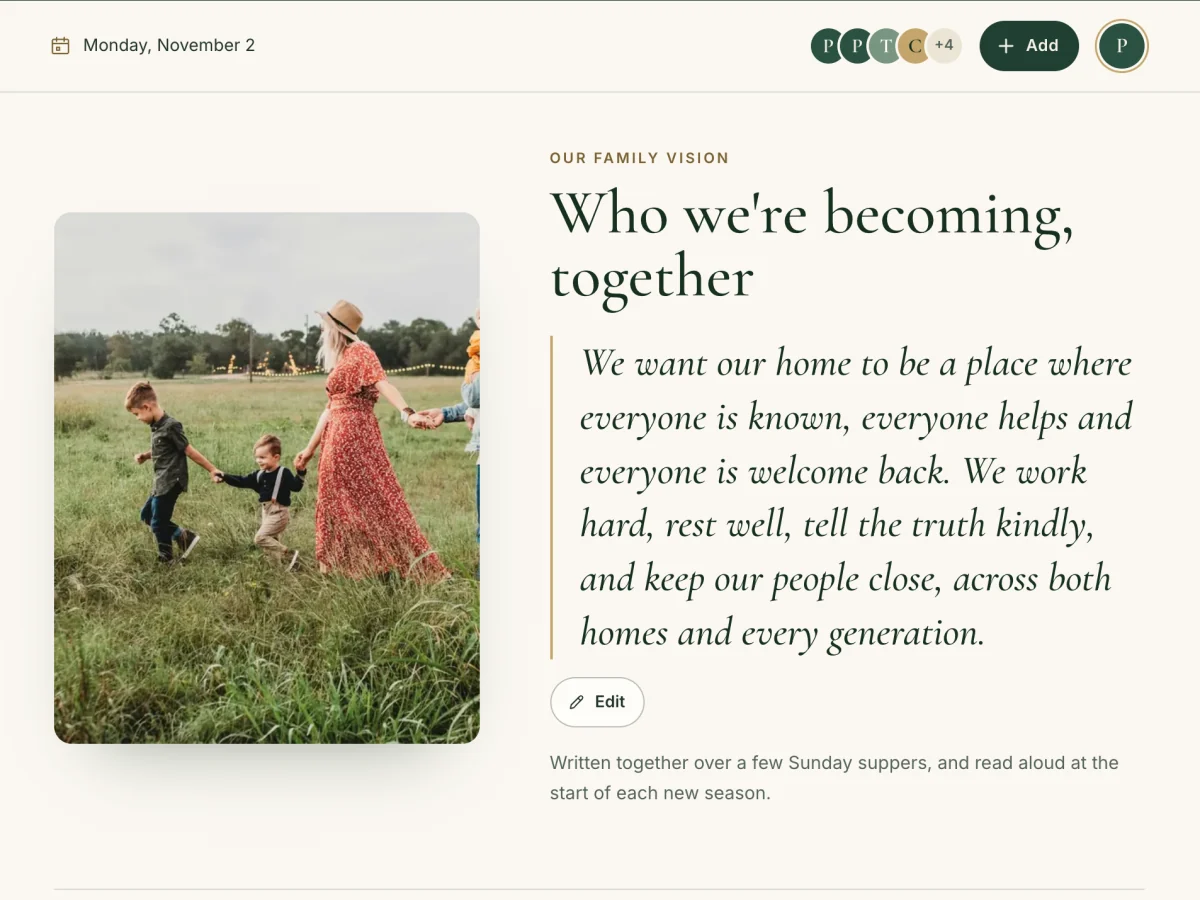
Then gather the replacements and the keepers into a few sentences about the kind of family you are becoming. This is the beginning of a family vision. It might read something like: "In our home, people are safe to tell the truth. We work hard together and celebrate often. When we hurt each other, we make it right." Short enough to remember, plain enough for a child to understand.
A vision only becomes real when something in the week depends on it. So pick one habit that carries it:
- A weekly family dinner where every person gets heard.
- A bedtime routine where you ask each child about their day and listen to the end.
- A habit of naming one good thing about each child to their face every week.
One habit kept faithfully will reshape your home more than a long list of resolutions.
A family is always becoming something. A vision chooses what.
What do you do when you hear your parent's voice in your own?
You will. Every parent breaking a pattern has days when the old one wins. What matters most is what happens next.
Come back and repair. Get down to your child's eye level and say something simple: "I yelled at you, and that wasn't okay. I was frustrated, but it wasn't your fault. I'm sorry." Then reconnect, a hug, a story, a few minutes together. Many people never heard a parent apologize. Hearing it from you teaches your children that love survives mistakes, which may be the most important thing you change.
Repair is a skill families can learn, and it is the safety net under everything else here. You do not have to be a parent who never gets it wrong. You have to be a parent who keeps coming back.
How do you handle your own parents along the way?
Carefully, and on your own timeline. Some grown children find they can talk openly with their parents about what they want to do differently. Others find that conversation would cause more harm than good, at least for now. Both are fine.
You do not need your parents' agreement to raise your children your way. You do need to protect your children from patterns you have decided to end. That may mean gentle boundaries, such as asking grandparents not to use certain words or punishments in your home. Say it simply and kindly, and keep it about your children, not about the past.
Many parents find that as they settle into their own way, some old hurts soften. You understand, a little more than before, how hard your own parents' job was.