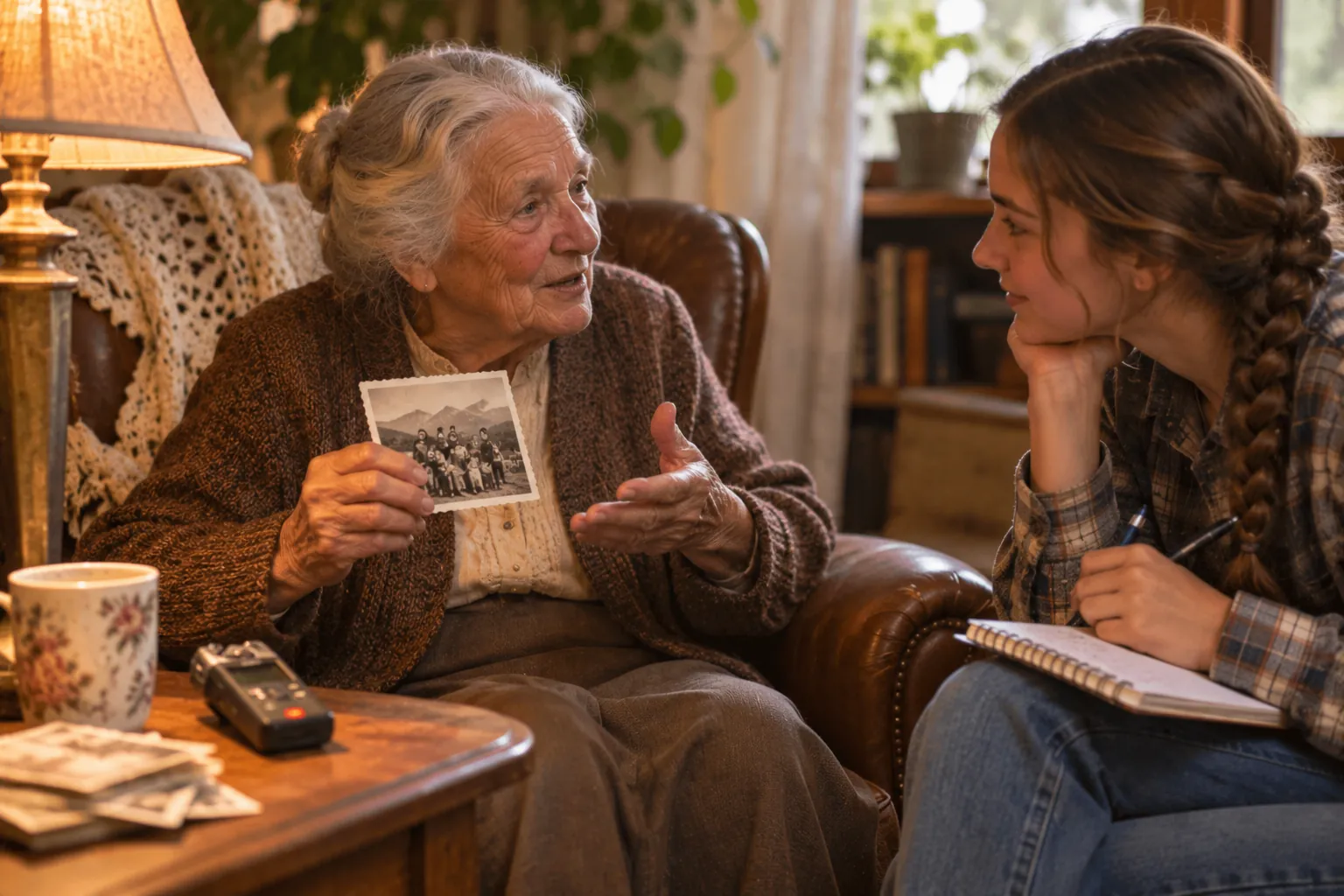
This is for anyone who has thought "someone should write Grandma's stories down" and hasn't yet. It covers how to start, what to ask, how to make it comfortable for an older person, and how to keep what you gather so it's still there for your grandchildren.
Why start now?
Most families mean to do this. Few actually do. The stories feel permanent because the person telling them is still at the table. Then a memory fades, or an illness comes, or a funeral arrives, and everyone wishes they had asked.
There's no need for fear here, only a gentle push. You don't need a project plan, special equipment or a perfect set of questions. You need a first conversation. The rest grows from that.
And the conversations are a gift in themselves. Many grandparents are rarely asked about their lives in any depth. Being asked, and listened to, tells them they matter. Many families find the recording is only half of what they gain.
Children rarely remember what we meant to do. They remember what happened again and again.
How do you begin the first conversation?
Keep the first one small and easy.
- Ask permission warmly. "I'd love to hear more about when you were young. Could I record it, so the grandchildren can hear it one day?" Most people are pleased. If they're shy, start without the recording and ask again next time.
- Choose a familiar place. Their kitchen table, a favorite chair, a drive somewhere they know. Comfort brings memory.
- Use what you already have. A phone's voice recorder works well. Set it on a soft surface near the speaker and test it for a moment first. Video is lovely when it's welcome, but audio feels less like a performance.
- Keep it short. Twenty or thirty minutes is plenty. Stop while they still have energy and something left to say.
Open with something concrete. "What did the house you grew up in look like?" is far easier to answer than "Tell me about your childhood." Concrete questions unlock memory. Big ones often stall it.
What questions bring out the best stories?
Good questions are specific, sensory and open. Here are some that tend to work well, grouped loosely.
Places and ordinary days
- What did you see from your bedroom window as a child?
- What did a normal Saturday look like when you were ten?
- What did your family eat on a special day?
People
- Who was the person you most wanted to be like when you were young?
- What was your own grandmother like? What did she smell like, sound like, cook?
- How did you meet Grandpa? What did you notice first?
Work and hard times
- What was your first job, and what did it teach you?
- What was the hardest season of your life, and what got you through it?
- What did your parents worry about?
Faith, values and advice
- What traditions did your family keep that we don't anymore?
- Was there a prayer, a song or a saying you heard often growing up?
- What do you hope your great-grandchildren know about our family?
You won't get through many in one sitting, and you shouldn't try. One good question can fill a whole conversation.
How do you listen so the stories keep coming?
The best interviewers talk very little. A few habits help.
Follow the energy. If a question about a childhood home leads to a long story about a neighbor, follow the neighbor. Your list is a guide, not a script.
Ask small follow-ups. "What happened next?" "How did that feel?" "What did your mother say?" These open more doors than any new question.
Let silence sit. Older people sometimes need a moment to reach a memory. Count slowly to five in your head before you speak.
Be gentle with sad memories. Loss, war, poverty and grief may surface. Let them be told if the person wants to tell them, and let them pass if not. "We don't have to talk about that" is always a kind thing to say.
A granddaughter recording her grandfather found that her planned questions mattered less than one unplanned moment. She asked about a scar on his hand, and he talked for the rest of the afternoon about the farm he grew up on. She had never heard any of it.
How do you keep it going without it becoming a chore?
One conversation is wonderful. A rhythm is what preserves a life.
Set a gentle cadence that suits both of you: one conversation each month, or a short call every Sunday afternoon, or a recording at every family visit. Put it on the calendar the way you would any other standing appointment. Over a year, the small conversations add up to something no single interview could hold.
Bring different people into it. Grandchildren often ask the questions adults forget to ask, and grandparents often answer them differently. A teenager interviewing a grandparent for a few minutes over a video call can become a family tradition in its own right.
Bring objects. Old photographs, a recipe card in their handwriting, a medal, a wedding dress. Ask "Tell me about this." Objects hold stories that questions miss.
How do you save the stories so the family can find them?
Recordings are easy to lose in a phone. Decide early where they'll live.
- Name each file clearly with the speaker and the topic, such as "Grandma, the farmhouse".
- Keep them in one shared place your family can reach, not scattered across devices.
- Add a few written notes with names, places and the stories worth finding later.
- Share a favorite. Play a short story at a family dinner or a holiday gathering. It invites more memories from others in the room.
Some families eventually turn the best stories into a small printed book, a written family history, or a story told at every reunion. That can come later. The first job is simply to gather and keep.
Where Smarkle fits
Smarkle is a calm, private space for a family's memories and traditions, shared with the circles you choose, from your household to the whole extended family. You can keep each recording with its notes and photographs, and set a monthly conversation with a grandparent as a rhythm so it doesn't depend on someone remembering. Your family's stories stay private by design; the family privacy page explains how.