


This is for parents who want grandparents and relatives to see their children grow up, but feel uneasy posting those moments where anyone can find them. That unease is reasonable. This article covers why private sharing matters, what to look for in a shared space, how to set expectations with relatives, and how to make the sharing feel warm rather than like a chore.
Why not just post to social media?
For many families, social media was simply the easiest way to reach everyone at once. But it was built for audiences, not for families. A photo posted there often reaches far more people than you intended: friends of friends, old classmates, strangers who come across it, and the company that keeps it.
A few reasons parents step back:
- Children can't consent yet. A bath photo or a tantrum that seems sweet today may embarrass a teenager later, and it may never fully disappear.
- Location and routine leak out. Pictures can quietly show your street, your child's school or the park you visit every week.
- The audience is too wide. Grandma wants every picture. A former coworker doesn't need any of them.
- The feed shapes the moment. When you are thinking about likes, you start taking photos for an audience instead of for the family.
None of this means sharing is wrong. It means the people who love your children deserve a closer, quieter place to see them.
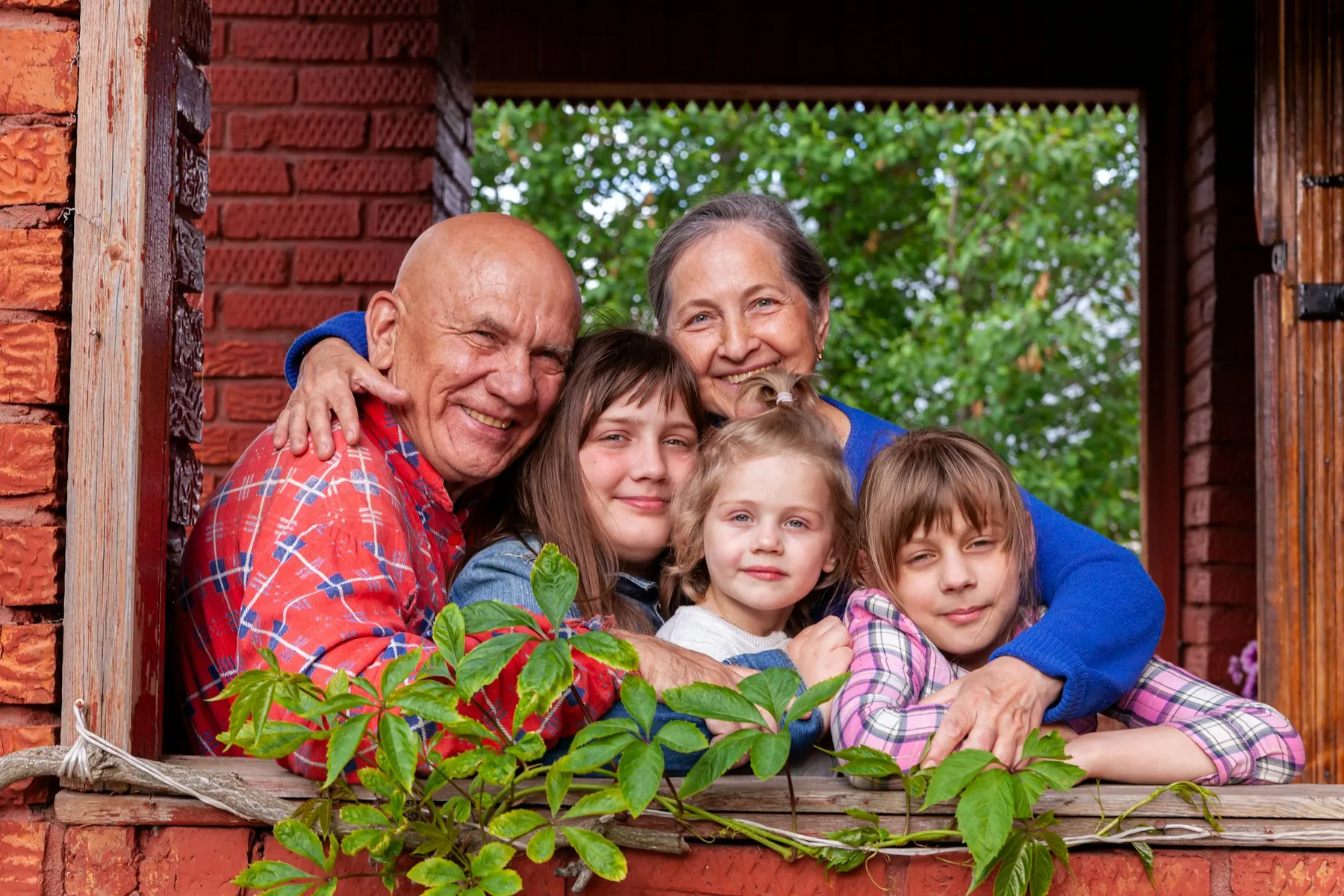
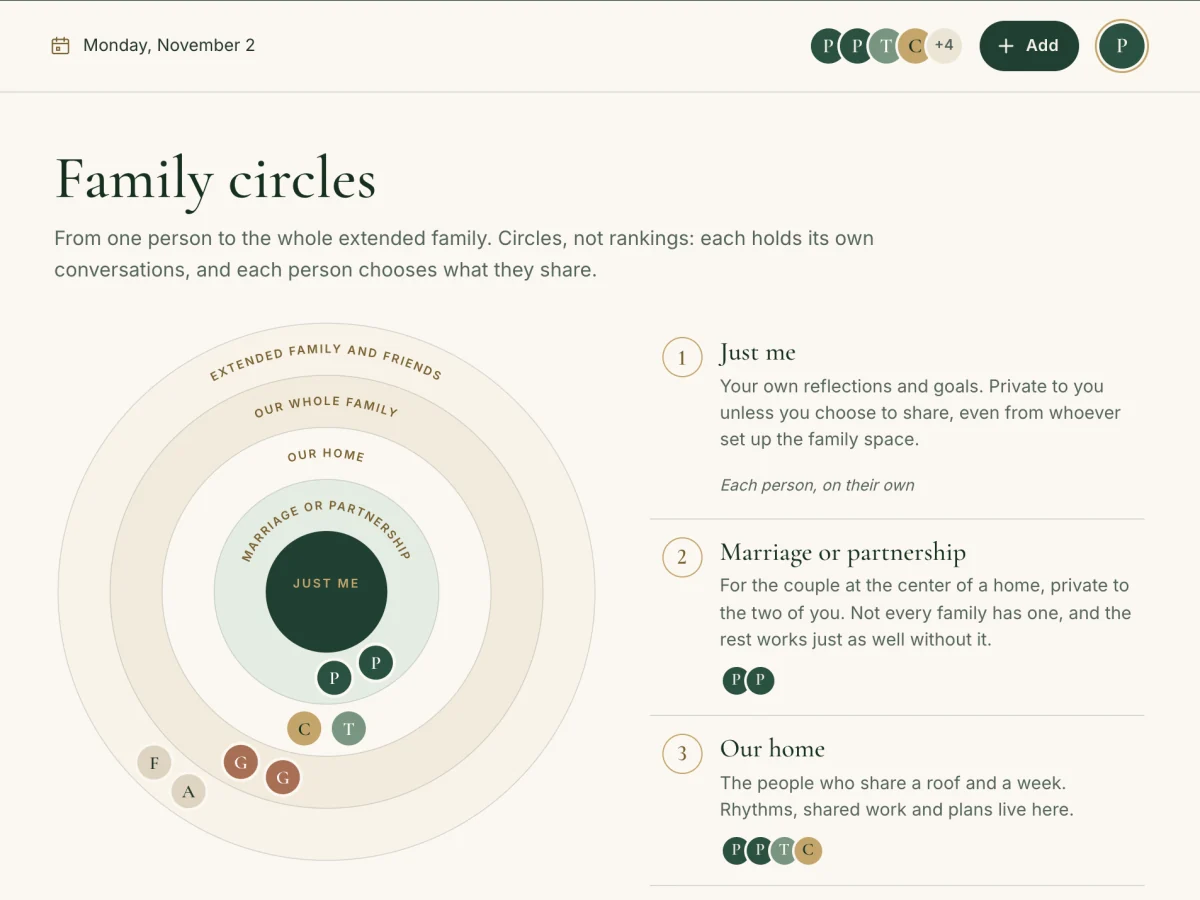
Every person has a place, and knows they matter.
What should we look for in a private space?
There are many ways to share privately, from a shared album on your phones to a family website. Whatever you choose, a few qualities matter:
- Invitation only. Nobody can see the photos unless you have added them by name.
- Easy for older relatives. If grandparents can't open it without help, they won't use it.
- Room for a few words. A short caption, a date, who was there. Photos without stories are quickly forgotten.
- Comments within the family. Relatives love to respond. A private place lets them do it without an audience.
- Simple to leave and to export. You should be able to take your photos with you if you ever change how you share.
You don't need anything elaborate. A family of five with grandparents in two states might be perfectly well served by a single shared album and the habit of adding to it each Sunday.
How do we set expectations with relatives?
The most common snag is not technical. It is a well-meaning relative who downloads a photo and posts it publicly. Most do it out of pride, not carelessness, and a kind, clear conversation usually solves it.
Say it simply, ahead of time, and without blame:
- "We're keeping photos of the kids off public sites. We made a private album just for family so you can see everything."
- "Please don't repost these anywhere public. If you'd like to share one, just ask us first."
- "You're the people we most want to see them grow up. That's why this album is just for you."
If someone forgets, remind them gently and privately. Most relatives are glad to help once they understand the reason. Leading with "you're the people we want to see this" makes it feel like an honor, not a rule.
How do we keep it from becoming another chore?
A private album only works if it is kept. A few small habits help:
- Pick a rhythm. Add a handful of photos once a week, perhaps on Sunday evening, instead of trying to share everything as it happens.
- Choose the best few. Relatives don't need forty pictures of one afternoon. Three good ones with a line of story say more.
- Let others add too. Invite your spouse, older children or grandparents to post their own photos from visits.
- Add the small moments. First lost tooth, a drawing on the fridge, a quiet morning. These often mean more than the holiday photos.
Some families also send a short monthly note to grandparents with a few photos and a paragraph about each child. It takes twenty minutes and becomes something they look forward to.
What about photos of other people's children?
Treat them with the same care you want for your own. When a picture includes a cousin or a friend, ask the parents before posting it anywhere, even in a private album. Within your own extended family, agree once on how photos will be shared so nobody feels surprised.
As your own children grow, ask them too. By eight or nine, many children have opinions about which pictures of themselves they want shared. Asking "Can I put this one in Grandma's album?" teaches them that their image belongs to them, and that the family respects it.
How do shared photos become family story?
A private family album is more than a delivery system for pictures. Over years, it becomes a record of who your family has been: the houses, the faces, the seasons, the jokes. Relatives far away become part of the everyday, not only the holidays.
To help that story grow, add context as you go. A date, a place, a few words about what was happening. Ask grandparents to add their own older photos and tell the stories behind them. The essay on organizing old family photos offers ideas for bringing older pictures in, and showing family photos on screens at home is a lovely way to bring them back into daily life.