This is for families who feel the years blurring together and want a way to stop, look back and remember. It works with toddlers and teenagers, with two people or twenty. It covers how to prepare, what to ask, how to include every age, and what to do with what you gather. If you are parents planning a separate retreat for the two of you, the annual parents' retreat agenda is the companion to this essay; this one is for the whole family.
Why look back together at all?
Because families forget faster than they think. Ask a child in December what happened in March and you may get a blank look. Ask a parent and you may get only the hard parts. Without a moment to gather it, a year of ordinary goodness can slip away unnoticed.
Looking back together does a few things:
- It builds a shared story. Each person remembers different pieces. Put together, they make a fuller picture than anyone holds alone.
- It shows children their own growth. A child who sees photos of themselves learning to ride a bike or starting a new school realizes how far they have come.
- It names what mattered. Families often discover that the moments they loved most were small: a rainy afternoon, a campfire, a long drive.
- It turns gratitude into a habit. Ending the year by counting good things shapes how a family sees the next one.
Children rarely remember what we meant to do. They remember what happened again and again.
How do we prepare?
Keep it simple. An hour of preparation is plenty.
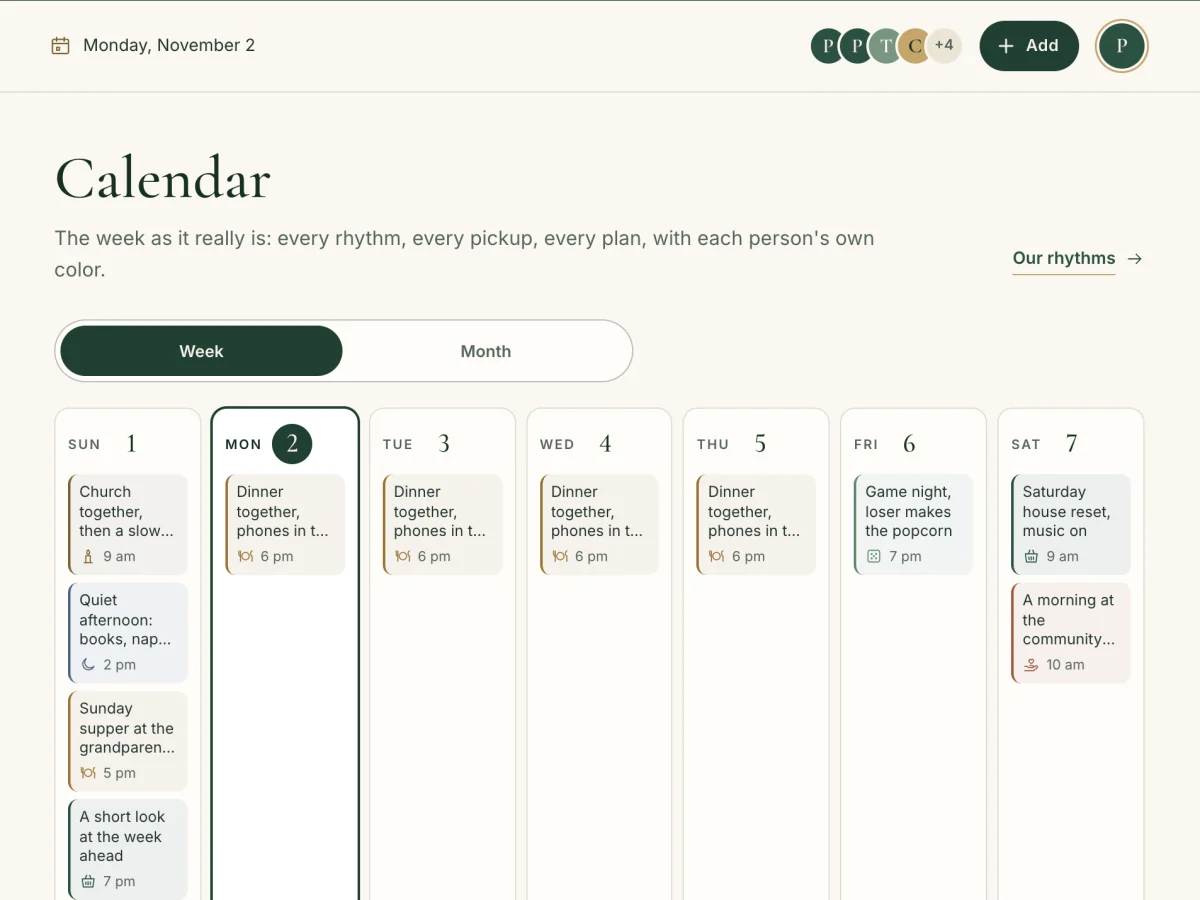
- Pick a date. Many families choose the last week of the year, or the first week of the new one. Put it on the calendar early so it is protected.
- Gather photos. Scroll back through the year on your phones and choose a few dozen. Pick a mix: big events and ordinary days, every person, some funny ones.
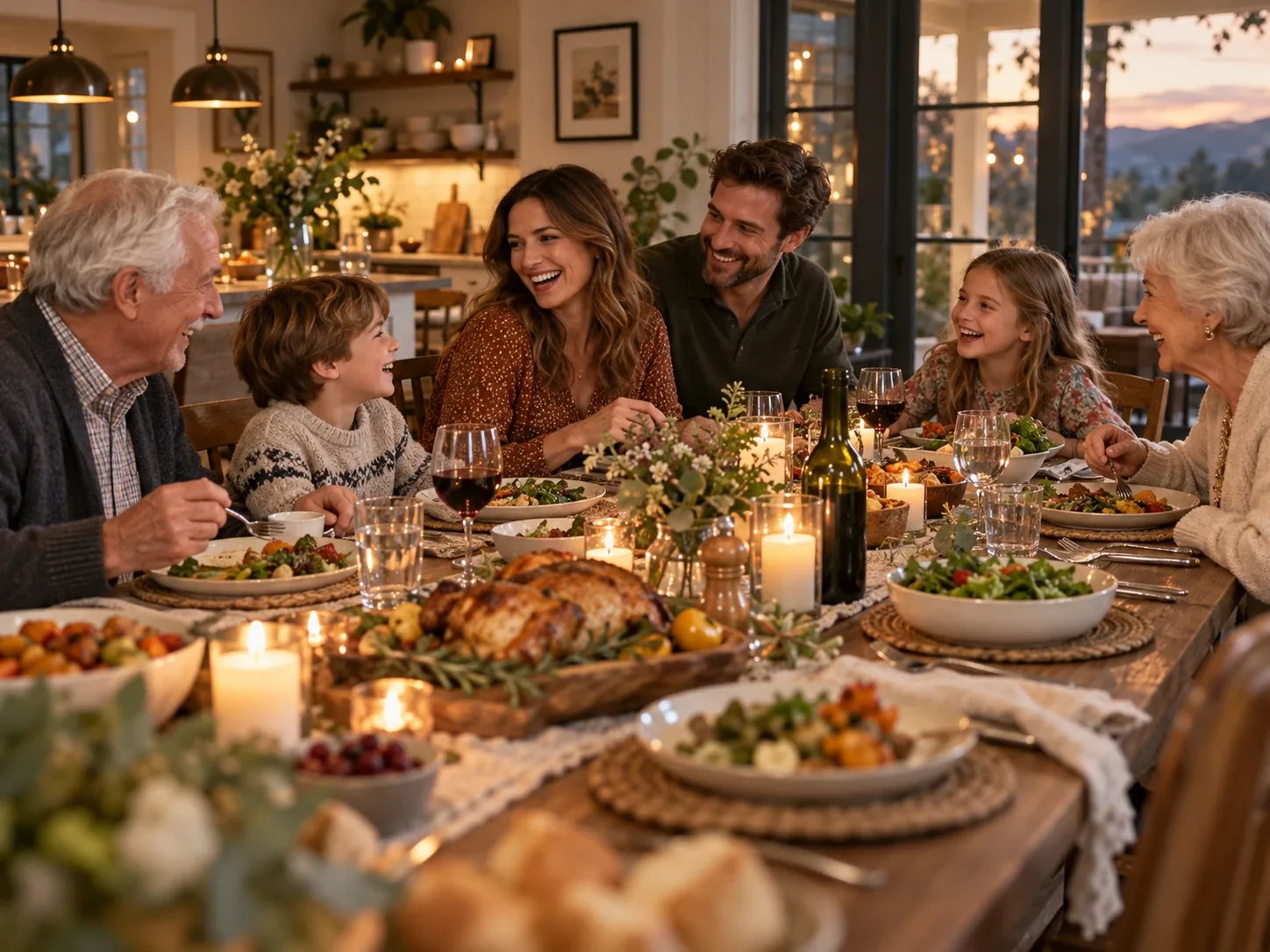
- Plan a meal. Something everyone enjoys, perhaps a dish that only appears on this night. Food makes it feel like a celebration rather than a meeting.
- Write out the questions. A short card or sheet, so nobody has to think of them on the spot.
- Have something to write on. A notebook, a large sheet of paper, or a shared place where you will keep the answers.
If gathering photos feels overwhelming, the essay on organizing old family photos has simple ways to start.
What questions should we ask?
Choose four to six. Go around the table, giving everyone a turn, including parents. A good set:
- "What was your favorite day this year?"
- "What was something hard, and how did you get through it?"
- "What is something new you learned or tried?"
- "Who outside our family made this year better?"
- "What made you laugh the hardest?"
- "What are you proud of, for yourself or for someone else here?"
- "What do you hope for next year?"
Keep the same questions each year, perhaps adding one new one. Repetition tells us who we are, and the answers become far more interesting when you can compare them year to year.
How do we include every age?
Small children have short attention spans and big feelings, so plan around them:
- Toddlers and preschoolers can point at photos and name what they see. Ask "What do you remember about this day?" and accept any answer.
- School-age children love being asked their opinion. Let them choose a few of the photos or read the questions aloud.
- Teenagers may be reluctant at first. Give them a real role, such as making a short slideshow, picking the music or choosing the meal. A teenager who owns part of the night tends to join in.
- Grandparents and guests can add a view from outside. Invite them to answer one question too.
Keep the whole thing to an hour or so. End before people are tired, and leave them wanting more.
What if it was a hard year?
Some years bring loss, illness, a move, money trouble or conflict. A year in review can still help, but it needs a gentler touch.
- Name the hard things honestly. Pretending the year was fine makes children feel their pain is not welcome. "This year was hard. We lost a lot" is truthful and kind.
- Look for the small goods inside it. A friend who brought meals, a sibling who stepped up, a quiet evening that felt like home.
- Leave room for tears. If someone cries, let them. Sit with it. You do not need to fix it.
- Shorten the night if needed. A meal, a few photos and one question is enough.
If grief is fresh, the essay on grief and the holidays may help you shape the evening.
What do we do with what we gather?
The answers are worth keeping. Some families:
- Write a one-page story of the year, in the family's words, and read it aloud the next year before starting.
- Make a small photo book, with each person's favorite day captioned in their own words.
- Keep a family yearbook in one place, adding a page each year.
- Set one or two shared hopes for the coming year, and put a first step on the calendar.
Over a decade, these pages become one of the family's most treasured possessions. Children grown and gone often ask to see them.