This is for parents who already keep some kind of weekly or seasonal rhythm and want one longer conversation each year to step back and steer. It walks through why the order matters, a two-day agenda you can copy, how to look at your family's progress without keeping score, and what to bring home.
Why hold a separate retreat once a year?
Weekly check-ins keep the house running. Seasonal conversations keep you close to each child. But neither gives you room to ask the larger questions: Are we becoming the family we hoped to be? What do we want this next year to hold? What are we drifting toward without meaning to?
Those questions need more time than a busy evening allows, and they need a clear head. An annual retreat gives them both. Many couples hold it near the start of the year or at the end of summer, whenever the calendar naturally turns over for them, and fold it into what would otherwise be that season's ordinary retreat.
Why does the order matter?
Tired parents make anxious plans. If you open a retreat with the calendar or a list of problems, the whole conversation tilts toward what is wrong.
So rest comes first, then gratitude, then direction, then details. By the time you reach the hard parts, you have remembered why you are doing this and who you are doing it with. The direction stays shared even when your hopes for the year differ. A family can share a direction without sharing identical dreams.
A family can share a direction without sharing identical dreams.
What goes on the agenda?
Allow two days, each with three or four hours of conversation and plenty of space around it.
Day one: rest and look back
- Arrive and rest. Check in, take a walk, eat well. Do nothing on the agenda until you both feel present.
- Celebrate the year. Each of you lists the family highlights from the past twelve months, then share them. Use your photos and calendar to remember. Say why each one mattered. Thirty to forty-five minutes.
- Appreciate each other. Name the specific things your spouse did this year that you are grateful for. Take your time. Twenty to thirty minutes.
- Share your own life. Each of you takes ten minutes on what is working and what is not, personally. Listen, do not fix. Twenty minutes.
- Talk about each child. Walk through each one's body, mind, heart, friendships and faith lived, starting with what is working. Up to half an hour each.
Day two: look ahead and decide
- Revisit your values and long view. Read your family values and any ten-year hopes aloud. Update them only if something has truly changed, which is rare. Celebrate the goals you finished, and write down the date you finished them. Fifteen minutes.
- Choose this year's goals. Look at the areas that matter most to your family, such as relationships, faith, health, learning, adventures or your home. Choose a small number of goals for the year and break each into a few clear steps. Give each step an owner and a date. Thirty minutes.
- Choose this season's priorities. From those goals, pick the few things that must happen in the next three months. Forty-five minutes.
- Plan the year. Put the big moments on the calendar (see below). Forty-five minutes.
- Look at your progress. Walk through each area of family life together (see below). Thirty minutes.
- Work through issues. Choose the most important unsettled matters and take each in turn: state it, find the root, listen, agree on a next step with a person and a date. One hour.
- Finish well. A high five for being good parents, and one question: what could make next year's retreat even better?
Take a ten-minute break between each part of day two. It helps more than you would think.
How do we look at our progress without keeping score?
Some planning tools ask couples to rate each area of family life with a number. We suggest leaving the numbers out. A score invites argument about the score instead of conversation about the life, and it quietly turns a marriage or a household into something to be graded.
Instead, take each area in turn and ask three plain questions:
- What progress have we made here this year?
- What has been hard?
- Is there anything here we want to work on together?
The areas might include your marriage, your time with each child, how the children get along, the work of the home, money, health, faith lived, your friendships and wider family, rest and fun, and your home itself. Anything that needs attention goes on your list of issues, worded kindly.
How do we turn the year's goals into the calendar?
A goal without a date is a wish. This is the part of the retreat that makes the rest real.
Go through the year month by month and put these on the calendar:
- Birthdays and the traditions around them.
- Milestones. Any child reaching an age or stage your family marks, with new responsibilities and new trust to go with it.
- Events your goals require. If a goal is a family trip, a service project or learning something together, book the date now.
- Holidays, trips and family gatherings.
- Your four seasonal retreats. Book them before you leave.
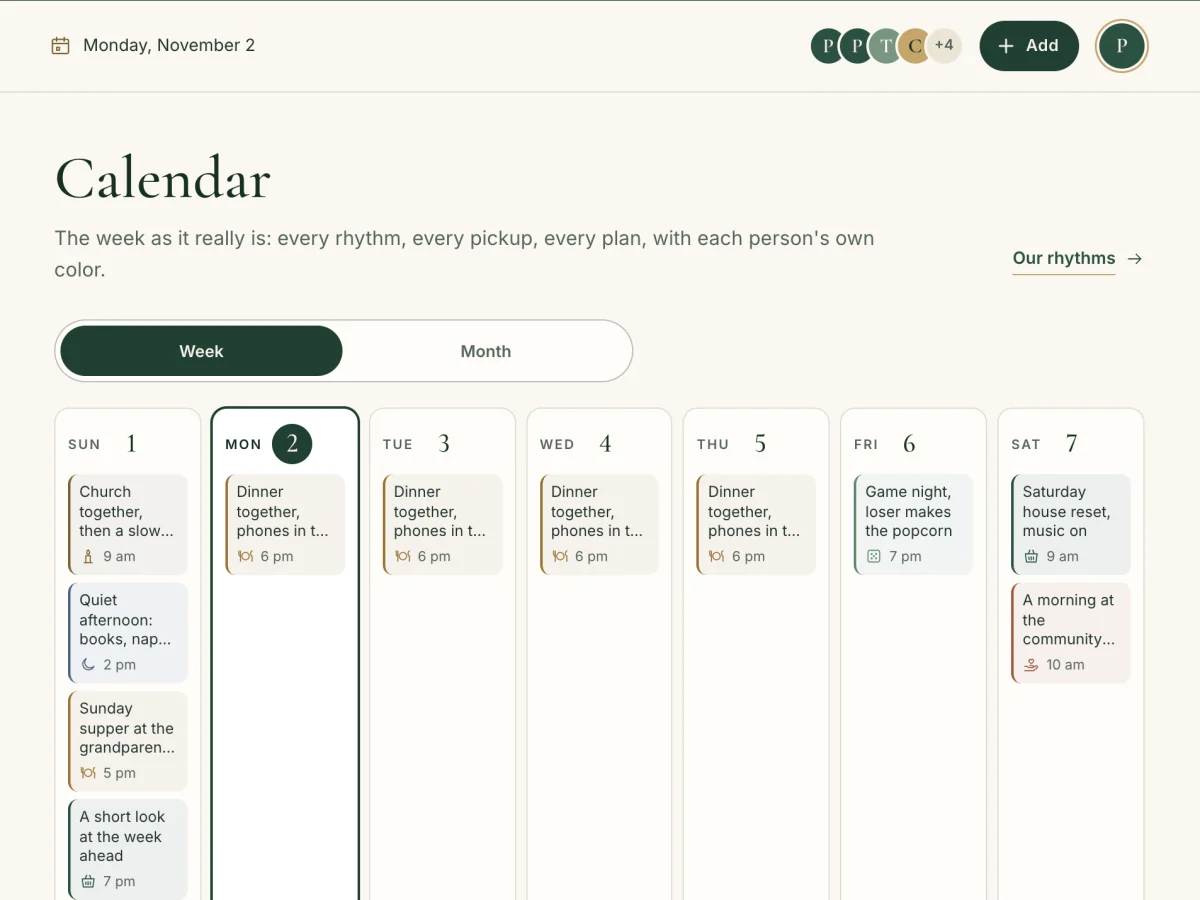
- Your weekly rhythms. Check that the weekly family planning time and your couple check-in still sit at times that work.
Then review everything already scheduled so you are both looking at the same year.
What should we bring home?
You should leave with a single page, not a binder: your values, the year's few goals with owners and dates, this season's priorities, and the calendar updated. Put it where you will both see it. Read it together at your next seasonal retreat.
Tell the children something of what you decided, in words they can hold. "This year we want more Saturdays outdoors as a family." "This is the year you get your own key." Children do not need the plan. They need to feel that the family is going somewhere on purpose.