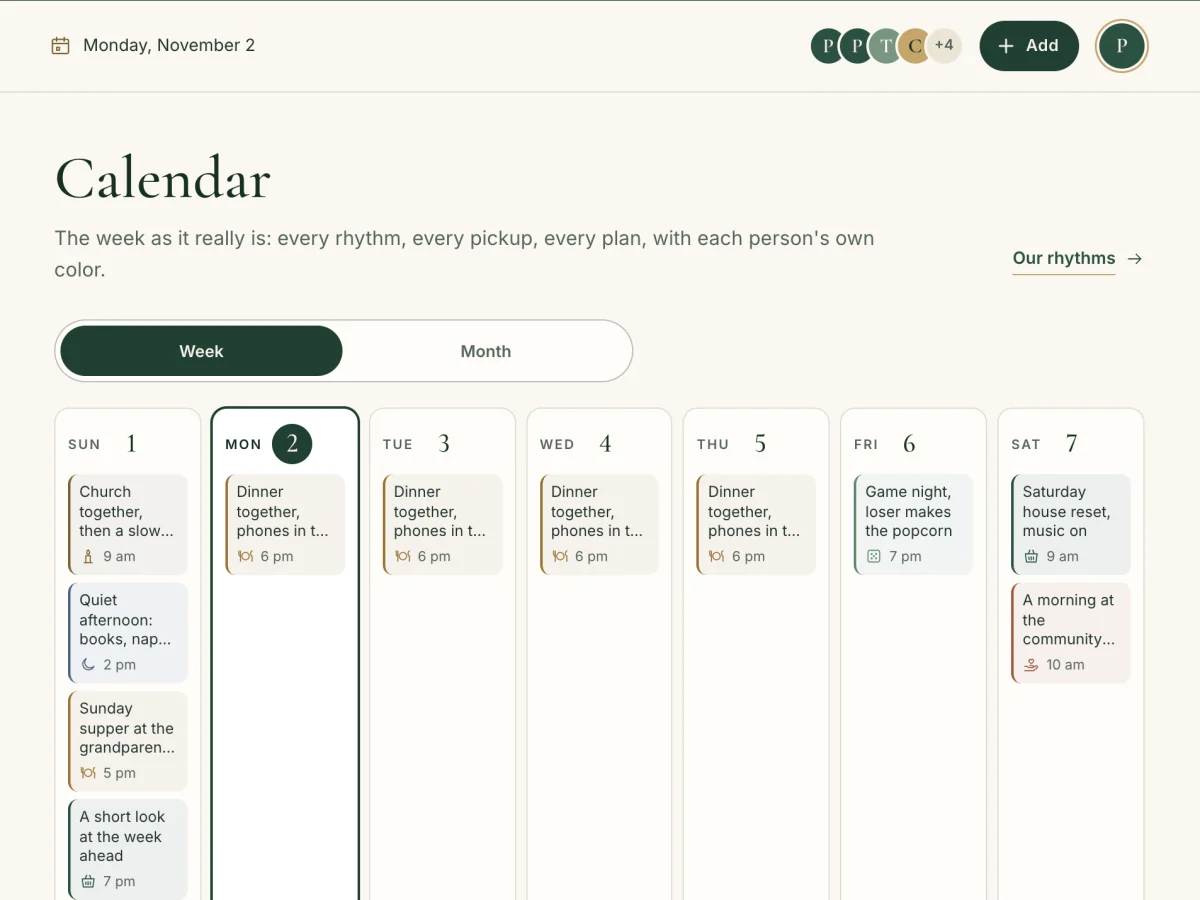
This is for parents who want the family to feel like a team without adding another long meeting to the week. It covers when to hold a huddle, the agenda you can copy, simple rules that keep children engaged, and what to do with the issues that come up.
What is a family huddle, and why keep it short?
A huddle is what a team does before the next play: a quick gathering to get on the same page, then back to the game. A family huddle does the same for the week. Everyone hears what is coming, everyone is thanked for something, and everyone knows what they are carrying.
Short matters. Children stay present for fifteen minutes, and so do tired parents. A family meeting that runs for most of an hour usually drifts into solving every problem at once, and children learn to dread it. A short huddle that ends on time teaches them the opposite: that gathering as a family is easy and good.
Some families begin with a longer agenda and trim it as they learn what they need. The trimmed version tends to last.
Don't hold meetings to create belonging. Live it every day.
When and where should we huddle?
Pick a time when everyone's energy is fresh. The hour right before or after dinner on a school night is often the worst, when children are tired and parents are stretched thin. Sunday afternoon, Saturday morning or right after a weekend meal tends to work better.
- Same day, same time, every week. It becomes part of the week's shape instead of something to negotiate.
- A comfortable place. The living room or the table, somewhere everyone can sit.
- Something to eat helps, especially with younger children.
- Phones away, except the one holding the calendar.
What goes on the huddle agenda?
Use the same order every week. Children relax when they know what comes next.
- Open together. A short prayer, a blessing, a moment of quiet, or a family saying. However your family begins things, begin this the same way. One minute.
- Appreciate each other. Each person names one thing another family member did this week that they really appreciated. Parents go first to show how specific it can be. Five minutes.
- Look at the week ahead. Walk through the coming days: who is where, who needs a ride, what is special, what is worrying anyone. Assign any tasks that come up. Five minutes.
- Check the household jobs. Are the family responsibilities working? Is anything slipping? Anything that is not working goes on a list for later, not into a debate now. Three minutes.
- One need each. Each person can name one thing they need this week: help with a project, a ride, a quiet evening, time with a parent. Three minutes.
Close with something to look forward to. Name one good thing on the calendar this week and say it out loud.
What rules help children take part?
Keep the rules few and say them every time until they are habit. Many families use just two:
- Sit still and stay at the table until the huddle ends.
- Raise your hand to speak, so the youngest voices get a turn.
Give children roles. A seven-year-old can be the timekeeper. A ten-year-old can read the week's events aloud. A teenager can lead the whole huddle now and then. A role turns a meeting they attend into a meeting they own.
Young children can take part in the appreciation and wander off afterward. Teenagers need a real voice: ask for their week rather than announcing yours.
What happens to the problems that come up?
A huddle is for coordination and connection, not for solving every problem. When an issue surfaces, write it down and decide where it belongs.
- Practical issues that affect everyone, such as a chore nobody is doing or a screen rule that is not working, can go on a short family list and be worked through at the end of a huddle when there is time. Take one at a time: state the issue, look for the cause, listen to everyone, agree on a next step with a name and a day.
- Issues between two people, such as two siblings fighting or a child upset with a parent, go to those people privately. Bringing them before the whole family turns the huddle into a courtroom.
- Deeper concerns about a child go to the parents' own weekly check-in, not the family table.
Issues are good. Issues are manageable. Issues are mentionable. The huddle is where children learn that, a little at a time.
What if the huddle keeps getting skipped?
It will, some weeks. Sports run long, someone is sick, the afternoon disappears. A missed huddle does not break the rhythm. Deciding that missing one means you have failed does.
If you find you have skipped three in a row, ask why. Is the time wrong? Is it too long? Is it more lecture than conversation? Shorten it, move it, or make the appreciation part bigger. Then start again next week without a speech.