This is for families who feel the end of summer coming like a wave and want to meet it on purpose rather than be swept along. It covers when to hold the planning night, what to cover, how to involve children of every age, and how to keep the plan alive once the school year begins.
Why hold a planning night at all?
Because the first weeks of school set the pattern for the year. Whatever habits form in that rush, good or bad, tend to stick. A family that plans together starts the year with shared expectations instead of discovering them in the middle of a stressful morning.
A planning night also gives children a voice. Starting a new grade, a new school or a new schedule can feel big. Being asked what they hope for, and what they're nervous about, tells them they're not facing it alone.
Think of it as a small family retreat: a pause before a new season, to look at what's coming and choose how you want to live it.
Repetition tells us who we are.
When and how should we hold it?
A week or two before school starts, on an evening when nobody has to rush off. Make it feel like an occasion, not a meeting:
- Choose a good setting. The kitchen table with a favorite meal, a backyard picnic, or a living room floor covered in calendars and snacks.
- Keep it to about an hour. Shorter for small children; teenagers can stay longer if they're engaged.
- Bring the tools. A family calendar, school schedules, activity times and something to write on.
- Start with something good. Each person shares a favorite memory from the summer.
Parents may want a short conversation of their own beforehand, to agree on the big decisions like budgets for activities and who covers which pickups.
What should we cover?
Walk through the year in a simple order: Plan, Work, Celebrate.
Plan: the schedule and the rhythms
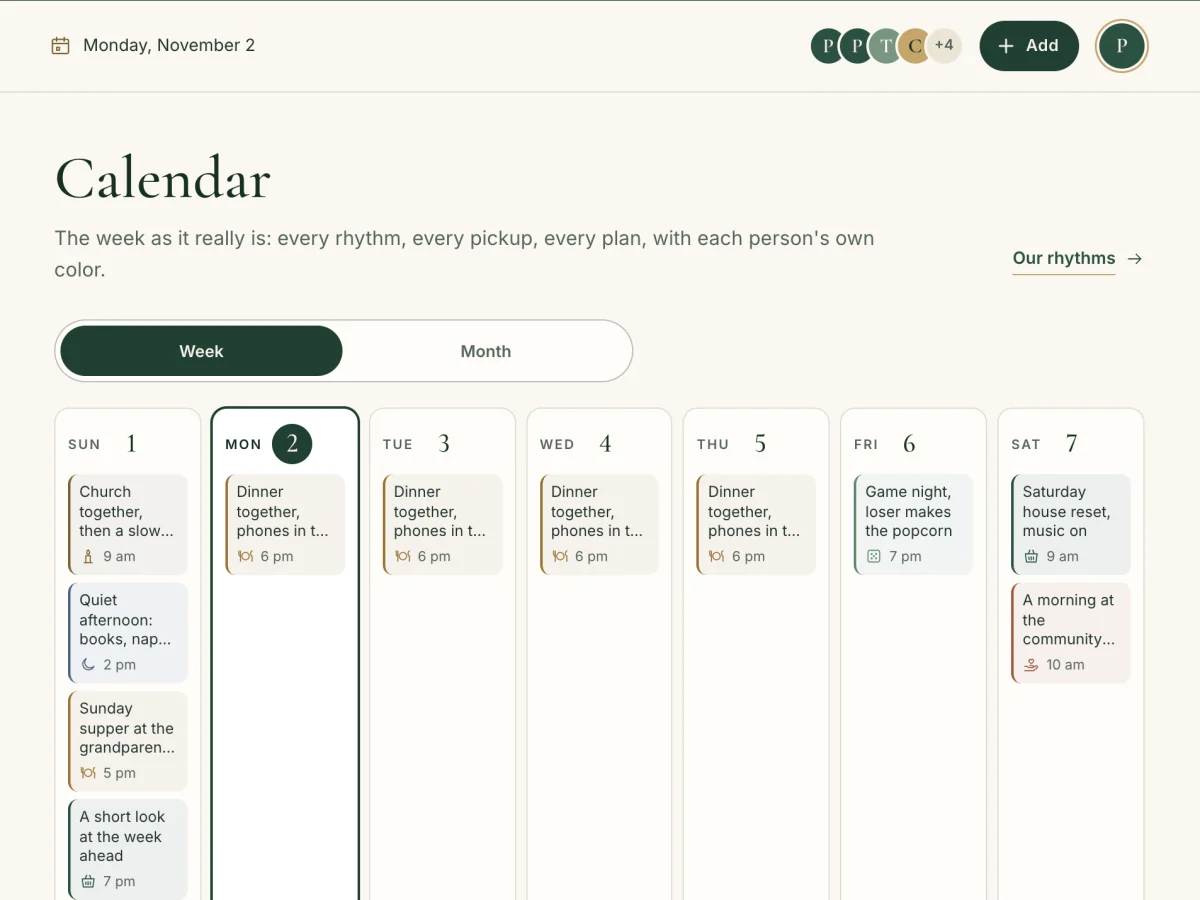
- Lay out the weekly calendar: school times, activities, work schedules, regular commitments.
- Spot the pinch points, such as the day with three pickups or the night with no time for dinner.
- Choose the rhythms you want to protect: family dinners on certain nights, a weekly family table on Sunday, a one-on-one with each child, a slower day of rest.
- Decide on screen and bedtime routines for school nights.
Work: the jobs and the routines
- Agree on the morning routine and who does what.
- Set up a homework time and place.
- Revisit chores for the new season, with each child taking on something a little more grown-up than last year.
- Decide who handles lunches, forms, permission slips and the endless school emails.
Celebrate: the good things to look forward to
- Plan a small first-day tradition, like a special breakfast or a photo on the porch.
- Put one fun family thing on the calendar for each of the first few weekends.
- Mark any big dates coming up: birthdays, holidays, family trips.
How do we involve the children?
Ask each child three questions, one at a time, and listen fully:
- "What are you looking forward to this year?"
- "Is there anything you're nervous about?"
- "What's one thing you want to get better at or try?"
Write their answers down. Come back to them at the end of the first month. A child who said they were nervous about making friends will feel cared for when you ask, weeks later, how it's going.
Give children real choices where you can: which night is pizza night, which activity they'll focus on this term, how they want to set up their homework space. Older children can own parts of the plan outright, like making their own lunches or keeping their own calendar. Growing up should come with more trust, not just more rules, and growing up shows how that trust can widen year by year.
How do we keep the plan going after the first week?
The plan only helps if it lives past the first Monday. A few habits keep it alive:
- Put the rhythms on the calendar right away. Before the school year fills every slot.
- Hold a short weekly check-in. Sunday evening, ten or fifteen minutes, looking at the week ahead. Weekly family planning explains how.
- Adjust after the first month. Some plans won't fit real life. That's normal. Change what isn't working without a sense of failure.
- Watch for overload. If the calendar is crammed and everyone is tired, cut something. Slowing down an overscheduled family can help.