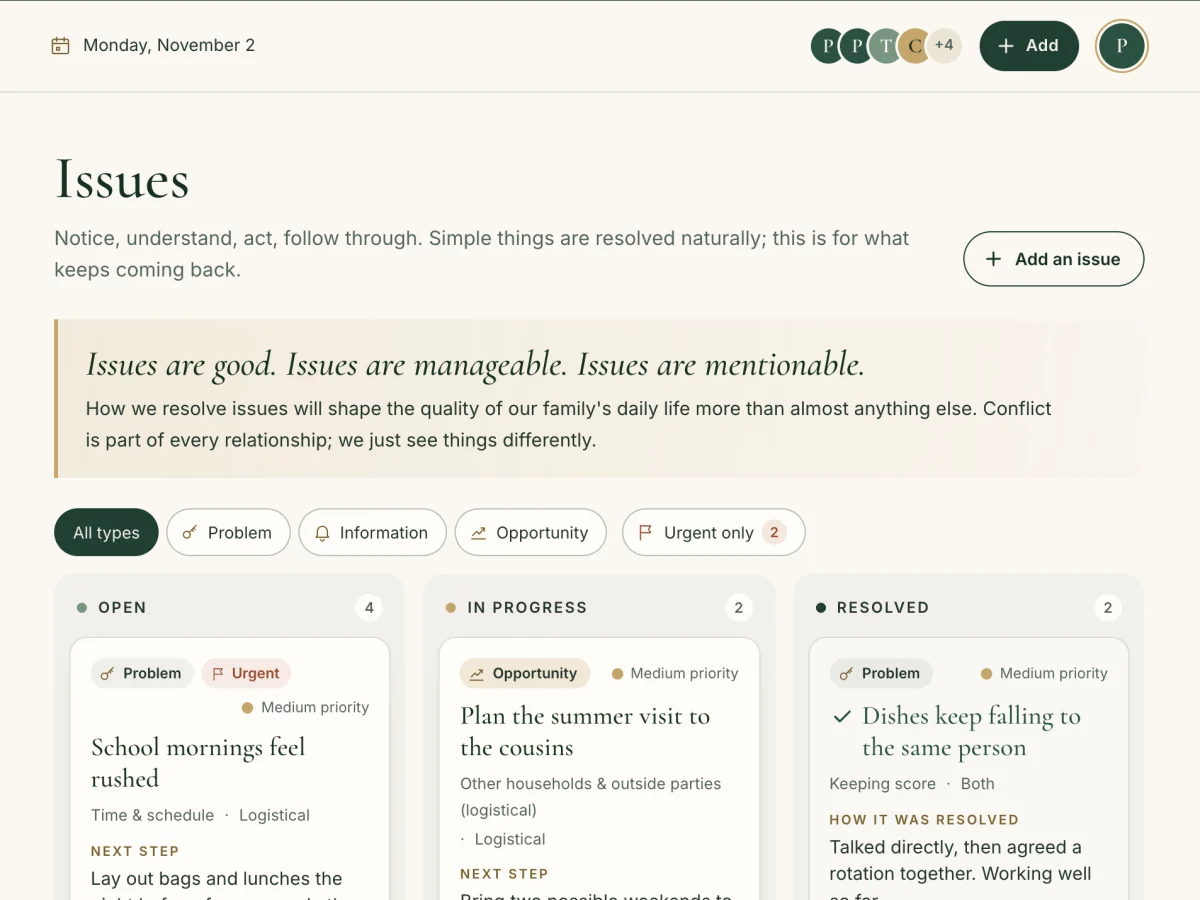
This is for couples, and parents and teenagers, who can almost recite their next argument before it starts, and who feel worn down and a little hopeless about it. It covers why repeated arguments happen, how to find what lies underneath, how to talk about it differently, how to choose a next step, and when it is time for outside help.
Why does the same fight keep coming back?
Because nothing about it has changed. The argument flares, both people say their usual lines, someone storms off or goes quiet, and eventually things calm down. Life goes on. But the underlying issue was never addressed, so the next trigger lights the same fire.
Each round also adds weight. You are no longer arguing about tonight's dishes. You are arguing about every night's dishes, every time you felt unheard, every tone of voice you remember. That is why small triggers produce such big reactions. The fight carries its own history.
It helps to say this plainly: a recurring argument does not mean your marriage or your family is failing. Every close relationship has a few issues that keep coming back. Issues are good, manageable and mentionable. The trouble is only when the same one is fought over again and again without ever being worked on.
Issues are good. Issues are manageable. Issues are mentionable.
What is the fight really about?
Underneath most repeated arguments is a need or a fear that has not been heard. A few common ones:
- Fairness. "I carry more than you do, and you don't see it."
- Respect. "You don't take my view seriously."
- Security. "I'm afraid we won't have enough," usually about money or time.
- Closeness. "I miss you, and this is the only way I know to say it."
- Room to choose. "I feel controlled," often heard from teenagers.
The dishes fight might really be about fairness. The money fight might really be about fear. The curfew fight with a teenager might really be about trust.
To find the root, ask yourself after the next round, once you have calmed down: "What was I actually afraid of, or hoping for, in that moment?" Then ask the other person the same question, with real curiosity. You may be surprised how different their answer is from what you assumed.
How do we talk about it differently?
Not in the heat of the moment. When the argument starts, it is fine to say, "I think this is our usual fight, and I don't want to have it again tonight. Can we talk about it properly on Saturday?" Then actually do.
Choose a calm time when you are both rested and fed, and talk about the pattern instead of the latest incident. A few guidelines that help:
- Start with what you share. "We both want the house to feel calm. We both want to feel like a team."
- Speak about yourself. "I feel tired and alone when the kitchen is a mess at night" lands differently from "You never help."
- Listen to the end. Let the other person finish, then repeat back what you heard before replying.
- Stay on one issue. Resist the urge to bring in everything else that bothers you.
- Keep it short. Thirty minutes of honest talk is better than three hours of circling.
If the conversation turns into the old fight, pause and try again another day. You are learning a new way to talk, and that takes practice.
How do we find a next step?
A recurring argument needs a concrete change, not just better feelings. Once you have named the root, ask together: "What is one small thing we could try for the next month?"
Keep it specific and testable:
- If the root is fairness about housework, agree who owns which areas, not who does which tasks.
- If the root is money worries, set a short weekly money talk and agree on a spending limit that needs a conversation.
- If the root is a teenager's wish for more say, agree on a clear curfew with a way to earn a later one.
- If the root is closeness, protect one evening a week for just the two of you.
Write the next step down. Agree when you will look at it again, perhaps at a weekly check-in. When you come back, ask honestly what worked and what didn't, then adjust. Most recurring issues get smaller through a few rounds of small changes, not one big conversation.
What if we slip back into the old fight?
You will, at least sometimes. A pattern built over years does not vanish in a week. When it happens, notice it, name it gently ("We're doing it again"), and come back to repair once things are calm. Repair is a skill families can learn, and it matters more than never fighting.
Over time, the fights tend to get shorter, softer and further apart. That is real progress, even when it doesn't feel dramatic.
When do we need outside help?
If an argument involves threats, intimidation, control, or anyone feeling unsafe, stop trying to solve it at home and reach out for help first: a counselor, a pastor or a domestic abuse service. Smarkle and every tip in this article are for ordinary disagreements, not for situations where someone is at risk.
Also consider a counselor if the same fight has gone on for years, if it is getting worse, or if one of you feels hopeless about it. A good counselor can help you see the pattern from outside and give you tools that are hard to find alone. Seeking help is not a sign of failure. It is a sign you care enough to change.