This is for families going through a job loss, a business struggle, a medical bill or any season when money is suddenly short. It covers how parents can talk to each other, what to tell children, how to cut back without making home feel poor in spirit, and how to keep hope alive while you rebuild.
First, a word for the parent carrying this
Money stress reaches into everything. You may be lying awake doing sums, feeling shame about something that wasn't your fault, or snapping at people you love because the fear has nowhere else to go. Many parents in this place feel they have let their family down.
You haven't. A job loss or a hard season is something that happens to a family, not a verdict on it. What your children will remember most is not how much you had, but how you treated each other while you didn't have it.
If the stress has turned into thoughts of harming yourself, or if arguments at home have become frightening, reach out for help today: a doctor, a counselor, a crisis line or someone you trust. That comes first, before any plan in this article.
How do we talk to each other without fighting?
Start with the adults, in private, at a calm time. Money fights usually aren't really about money. They are about fear, blame and feeling unheard.
A few things help:
- Pick the moment. Not late at night, not in front of the children, not right after a bill arrives. Set a time.
- Start with the shared goal. "We both want the children to feel safe and us to get through this together."
- Lay out the facts. What's coming in, what's going out, what's in savings, what's due. Write it down. Facts are calmer than fears.
- Leave blame out. Whatever led here, going back over it rarely helps now. If there's something that needs repair, name it once and come back to it later.
- Divide the work. One handles the job search, the other the budget and the calls. Or swap. Shared load means shared ownership.
- Hold a short weekly money talk. Same time each week, a few minutes. Regular check-ins prevent the build-up that leads to explosions.
If you're a single parent, find one trusted adult to think it through with. Carrying it entirely alone is harder than it needs to be.
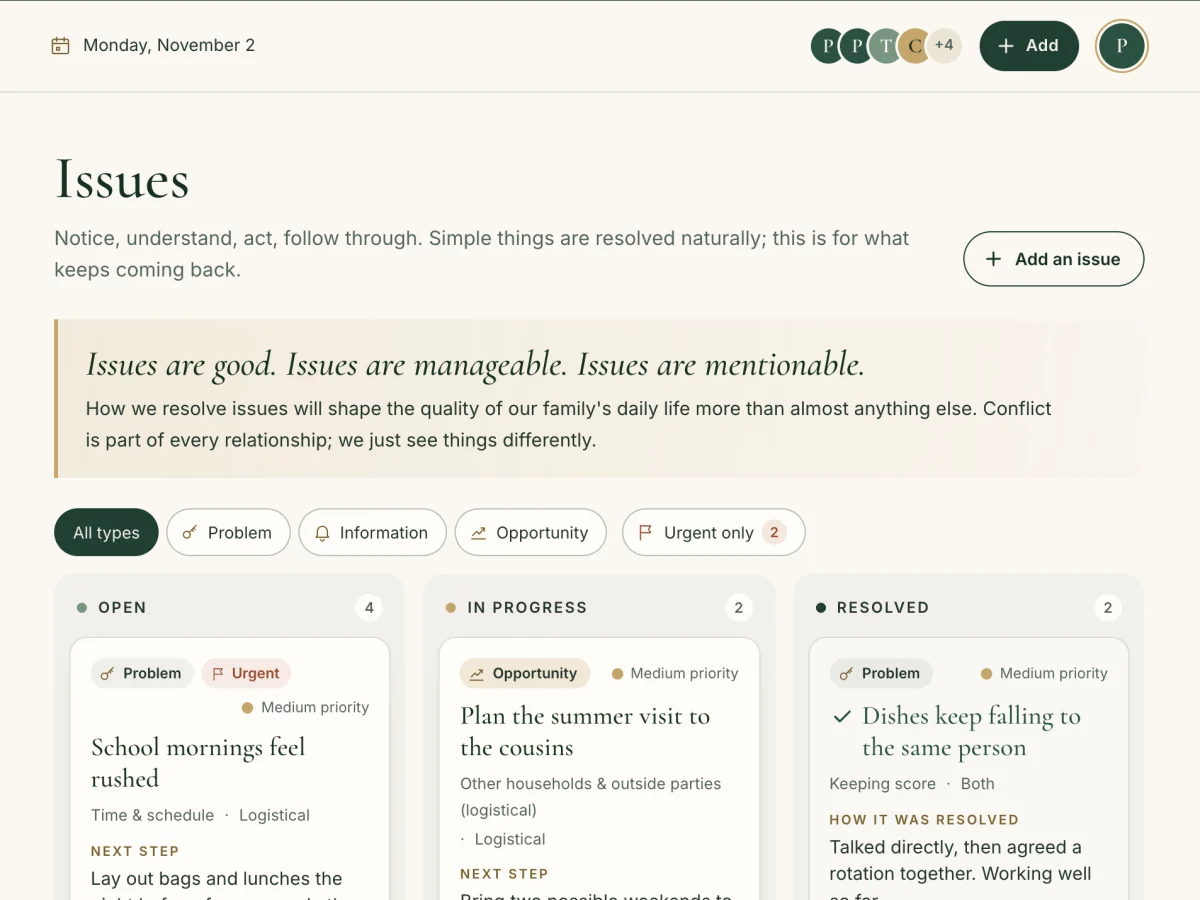
Issues are good. Issues are manageable. Issues are mentionable.
What should we tell the children?
The truth, sized to their age. Children notice tension long before anyone explains it, and they often fill the silence with fears that are worse than the facts, including the fear that it is somehow their fault.
- Young children need simple facts and reassurance: "Dad's job ended, so we're going to be careful with money for a while. We'll still have our home and food, and we'll be okay together."
- School-age children can hear a little more: "We're spending less while Mom looks for new work. That means fewer treats out, but we'll find good things to do at home."
- Teenagers can handle real information and may want to help. Be honest, but don't make them carry adult worry. "This is ours to solve, but we'd love your ideas."
Avoid promises you can't keep. Instead of "nothing will change," say "some things will change, and we'll face them together." Invite questions, and come back to the conversation as things develop.
How do we cut back without making home feel poor?
Focus on what you keep, not just what you lose. A family can be careful with money and still be rich in time, laughter and attention.
- Name the cuts together. Let each person suggest something they can live without. Children feel less powerless when they choose.
- Protect a few small joys. Keep a family movie night, a pancake breakfast, a walk to the park. These cost little and say "we're still us."
- Find no-cost celebrations. A picnic in the backyard, a library trip, a game night with homemade snacks. Celebrate birthdays simply but warmly.
- Keep your rhythms. Shared meals, a weekly family table, a day of rest. These anchor a family when everything else feels uncertain. Weekly family rituals has ideas that cost nothing.
How can everyone have a part in the response?
People feel steadier when they can do something. Give each person a small, real part.
- A teenager might take on cooking a family dinner each week, or look for a part-time job if that fits.
- A younger child might help plan a no-spend weekend or be in charge of turning off lights.
- The whole family might work together on a home project that saves money, like a garden or mending.
Thank each person for their part. It helps children feel like contributors rather than burdens, and it teaches resilience in a way no lecture can.
How do we keep hope alive?
By marking progress and keeping perspective. A hard season is a season, not a whole life.
Talk about what is going well each week, however small: a good interview, a kind neighbor, a meal everyone enjoyed. If your family prays, pray together for each other. Remember other hard times your family has come through. Tell those stories.
When things turn, celebrate it. And when you look back, you may find this was the season your family learned how strong it is together.