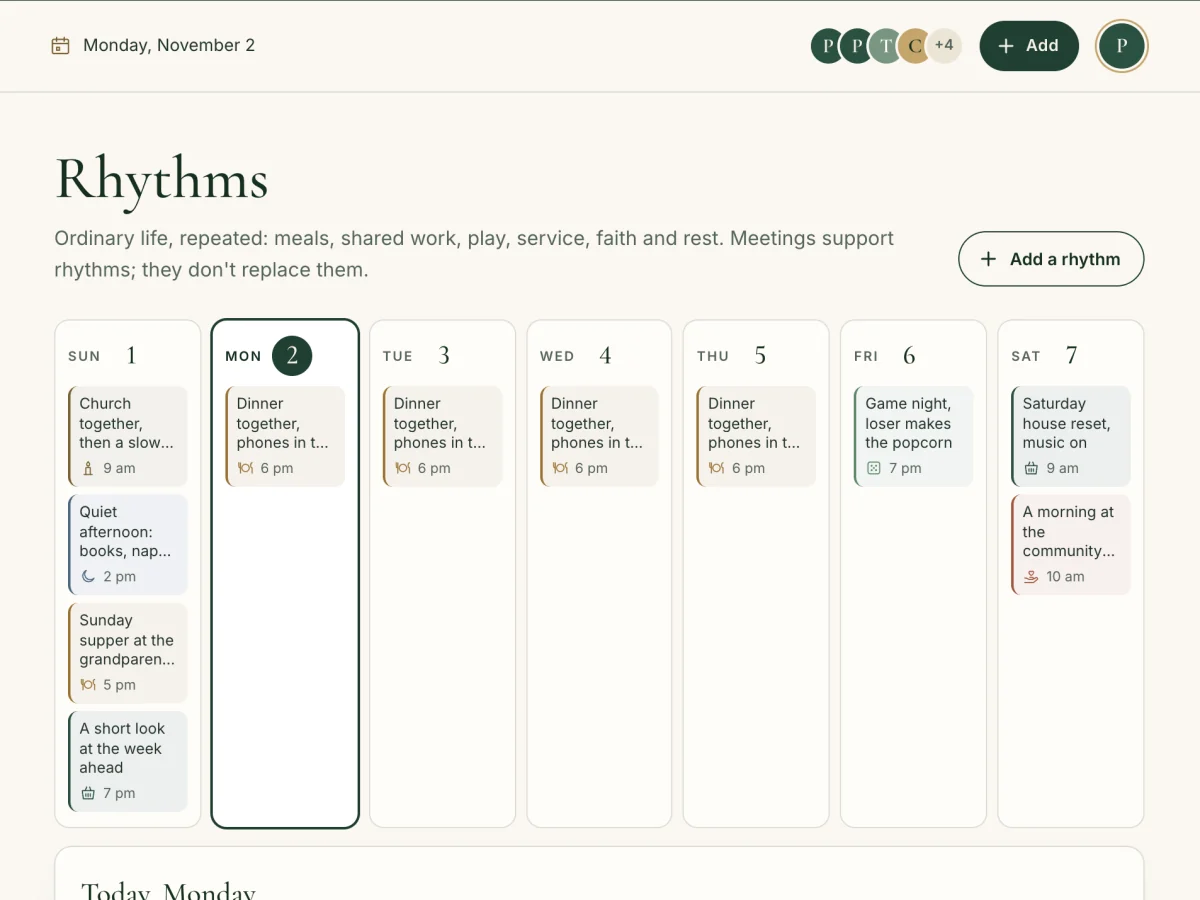
This is for parents who spend more evenings in the car than at the table, and who wonder whether the soccer, the piano, the tutoring and the youth group are building their children or wearing everyone out. It covers how to count the real cost of an activity, how to decide with your child rather than for them, and how to protect the few things a family cannot do without.
Why does this feel so hard to decide?
Because every single activity is good. Music trains patience. Sport teaches a child to lose and try again. Clubs give friends and a sense of belonging. Nobody signs a child up for something harmful, so there is never an obvious villain to cut.
There is also a quiet fear underneath. Other children seem to be doing more. A coach says this is the year that matters. A grandparent asks what your daughter is involved in, and "nothing much" feels like a confession. Many parents keep adding because stopping feels like falling behind.
If that is where you are, it helps to say it plainly: you are not failing your children by wanting a slower week. You are noticing a cost that the sign-up sheet never shows.
What does an activity really cost?
The fee is the smallest part. The real cost is measured in evenings, in driving, and in the shape of the whole week. When you weigh a new commitment, look at:
- The family meal. Does it take a dinner away, or push dinner so late that nobody sits down together?
- The day of rest. Does it reach into the one day your family keeps slower, whether you call it a Sabbath or simply a quiet Sunday?
- The other children. Does a sibling spend another afternoon waiting in a car or a gym lobby?
- The parents. Does it take the last evening you had to talk to each other?
- The child's own time. Does your son still have hours to read, build, wander and be bored? Boredom is where a lot of growing happens.
A useful rule is to protect the meal and the day of rest first, and let activities fill only the room that remains. Most families do it the other way around, and the meal quietly loses.
Children rarely remember what we meant to do. They remember what happened again and again.
How many is enough?
Rather than a number, try a shape. Many families find that each child can hold one main commitment in a season, perhaps with one lighter thing beside it, and still come home to a family that eats together. Some children thrive with more; some need less. A child who is anxious, tired or often sick is telling you something, even if they say they love every activity.
Watch for these signs that the week has tipped:
- Dinner is eaten in the car more than once a week.
- Your child cannot remember the last time they had nothing to do.
- Sunday is spent recovering from Saturday.
- Homework happens late at night, with tears.
- You feel more like a driver than a parent.
You can read more about the wider pattern in slowing down an overscheduled family. Here the question is narrower: what to do about this child and this activity.
How do we decide with our child, not for them?
Children usually know more than we expect about what they love and what they are doing out of duty. Sit with each child, away from the rush, and ask:
- "Of everything you do, which one would you miss most?"
- "Is there one you keep doing because you think we want you to?"
- "If you had one more empty afternoon a week, what would you do with it?"
Listen without arguing. A child who says they would miss the piano most but dreads the swim team has just handed you a decision. A teenager may need longer to answer, and may want to talk it through more than once.
Then decide together, and let the decision be partly theirs. A child who chose to keep one thing and set another down will usually throw themselves into the one they kept. That is worth more than four activities done halfway.
How do we stop without guilt?
Finish well when you can. Let your child complete the season, thank the coach or teacher, and stop at a natural end rather than in the middle. That teaches commitment without making it a prison.
Then fill the space on purpose, or it will fill itself. If you take away a Tuesday practice, give Tuesday something: a family dinner, a walk, a game, an evening at home with nothing planned. The point of cutting was never an empty calendar. It was room for the things that make you a family.
When others ask, a simple answer is enough: "We're keeping our evenings a bit quieter this year." You do not owe anyone a longer explanation.
What should stay no matter what?
Every family will answer this differently, but most good answers include a few of these:
- One meal together most days, even if it is breakfast.
- One slower day each week, set apart for rest and each other.
- Unhurried time with each child, even ten minutes, doing something they choose.
- A weekly look at the calendar together, so nothing lands as a surprise.
These are the rhythms that hold a family when the season is full. Keep them first, and activities become something your family does rather than something that happens to it.