This is for parents who want a clear sense of what is reasonable at each age, and who would rather chores felt like growing up than like punishment. It walks through the stages from toddler to teenager, offers a list for each, and covers how to hand a job over so it stays handed over.
Why think of chores as stages of trust?
A chore chart can feel like a list of things children owe the household. That framing makes every job a small tax, and children treat it that way: done grudgingly, done badly, or not done at all.
There is a better way to see it. Each job a child takes on is evidence that they are becoming capable. A four-year-old who carries the napkins is learning that they belong to a family that works together. A twelve-year-old who makes Tuesday dinner is learning they can feed people. When you hand over a job, you are saying something true about who your child is becoming.
That changes how you talk about chores. Instead of "You have to do the dishes," it becomes "You're old enough to run the dishes now." Same task, different meaning. Over the years, the jobs add up to a quiet message: you're becoming capable of more, so we trust you with more.
You're becoming capable of more, so we trust you with more.
What can toddlers and preschoolers do?
From about two to four, children mostly help beside you. They are slow, they make messes, and they love it. This is the season to let them, because the eagerness does not last if it is always refused.
Good jobs for this age:
- Put toys back in a bin or basket
- Carry napkins, spoons or unbreakable cups to the table
- Put dirty clothes in the hamper
- Wipe up a small spill with a cloth
- Feed a pet with a scoop you have measured
- Water a plant with a small can
- Hand you pegs or socks while you hang or sort laundry
The point is not the work they finish. It is the habit of being included. "Come help me" is the most useful sentence you have at this age.
What can children of five to seven handle?
At this age children can do real little jobs, still mostly alongside a parent but with more of the task in their own hands. They can follow a short sequence of steps and remember a job that happens at the same time each day.
- Set and clear the table
- Make their own bed, roughly
- Fold towels and washcloths, match socks
- Sweep a small area with a hand broom
- Pack part of their own lunch
- Sort recycling
- Help unload the dishwasher, starting with cutlery
- Tidy their room with a short checklist
Tie each job to a fixed moment: table setting before dinner, beds before breakfast. A rhythm does the reminding so you do not have to.
What about eight to eleven?
Somewhere around eight, many children are ready for a first stewardship: something living or lasting that is truly theirs. A garden plot, the family chickens, the bookshelf in the hall, the cat's water bowl. Say it plainly: "This is yours." Check on it, but do not take it back the first time it wobbles.
Through the next few years, the aim is real capability. By eleven, a child can learn to:
- Cook a handful of simple meals from start to finish
- Do a full load of laundry, from sorting to folding
- Clean a bathroom properly
- Vacuum and mop a room
- Use basic tools safely with supervision
- Take out bins on the right day without being reminded
- Pack for a trip from a list
- Handle a small amount of money for an errand
"Show me" is the phrase of this stage. Ask them to show you how they did it, not to prove themselves, but to give them a chance to explain their own work.
What can teenagers own?
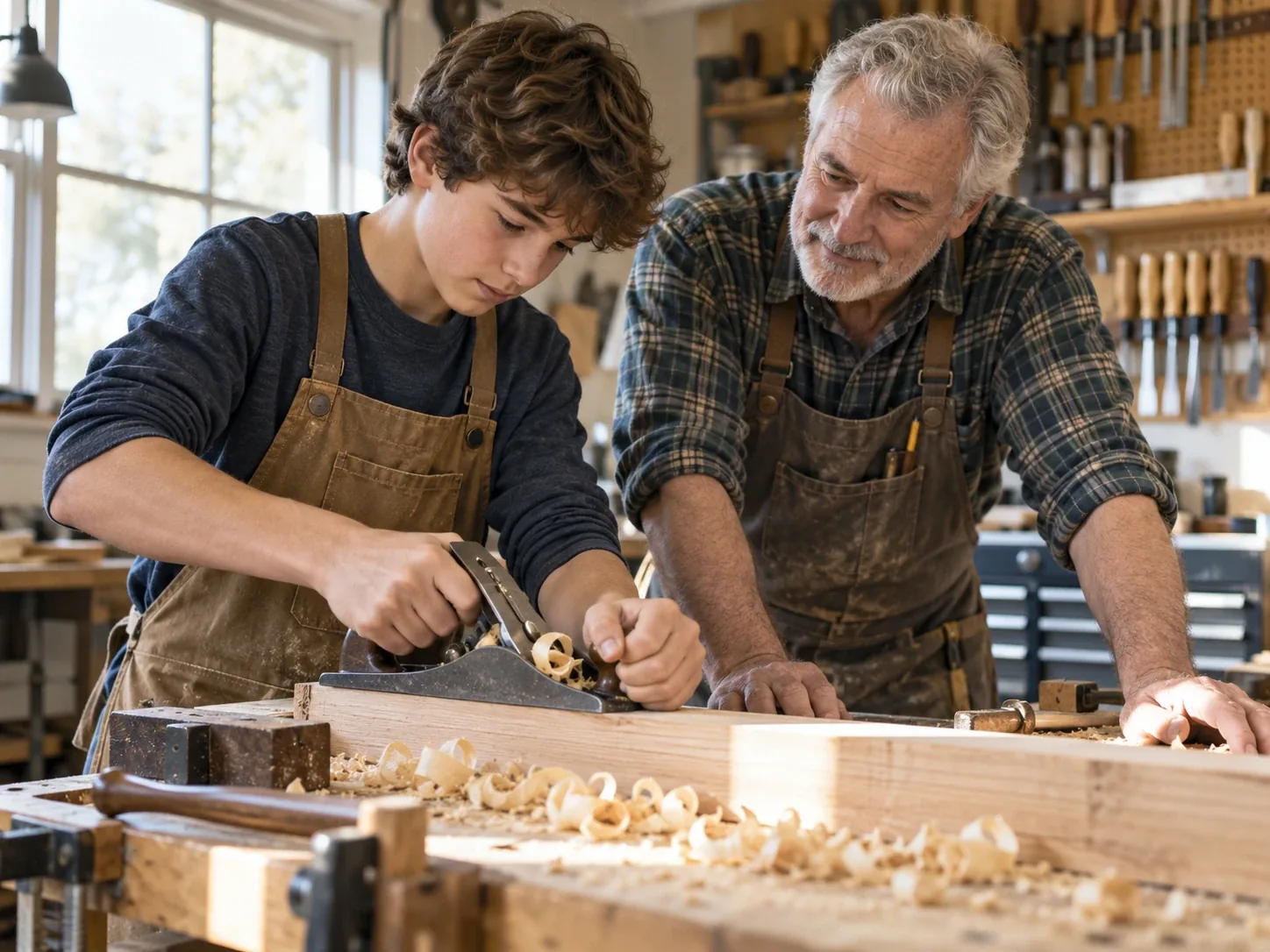
From around twelve, children can work beside adults on bigger things: a weekend project, preparing for a gathering, a job site, a move. By fourteen, many are ready for jurisdiction, a whole area of the home that is theirs to make work. Not a list of tasks but a responsibility, such as:
- Sunday breakfast, every week, menu and all
- The car's cleaning and simple checks
- The yard, or one section of the garden
- Planning and shopping for one dinner a week
- Teaching a younger sibling a skill
- Keeping the pantry stocked from a running list
When the area wobbles, resist taking it back. Ask instead, "What went wrong? What's your fix?" That conversation teaches more than any chart. By sixteen, the trust widens again to a paid job, driving and leading younger children.
How do you hand a job over so it sticks?
Most chores fail in the handover, not the doing. A few habits help:
- Teach side by side first. Do the job together several times, explaining why each step matters.
- Then watch them do it. Stay nearby and say little.
- Then let it go. Make the job theirs, with a fixed time and a clear standard.
- Inspect kindly and briefly. A short look is enough. Praise what is done well before mentioning what is missing.
- Do not redo it in front of them. If the towels are folded badly, teach the fold again another day.
For a closer look at that handover, see how to teach children responsibility through chores.
What if my child is behind for their age?
The ages here are a guide, not a deadline. Children develop at different speeds, and a child who came late to a skill is not behind in any sense that matters. If a step does not fit yet, look for the missing skill underneath it and teach that instead of holding the whole step back. A ten-year-old who cannot yet cook a meal may simply need to learn to crack eggs and use a timer first.