This is for parents who look at a fifteen- or seventeen-year-old and feel a flicker of worry: do they actually know how to live on their own? It is also for parents of younger children who want to start early and calmly. This article walks through the core skills, how to teach them by age, how to hand responsibility over gradually, and what to do if time feels short.
Why teach life skills at home at all?
Because nobody else will do it as well. School teaches many things, but rarely how to cook rice, read a lease or call a doctor's office. Children learn these by watching and doing at home, alongside someone who cares whether they get it right.
There is a deeper reason too. Each skill a child learns is a small piece of trust. When a twelve-year-old makes dinner for the family, they are learning more than a recipe. They are learning that they are capable, that the family depends on them, and that growing up comes with more trust, not just more rules.
Many parents do things themselves because it is faster. That is true in the moment. But every task you keep doing for a capable teenager is a task they will have to learn alone, later, under more pressure.
You're becoming capable of more, so we trust you with more.
Which skills matter most?
Here is a practical list, grouped by area. You do not need to teach all of it perfectly; aim for basic confidence in each.
In the kitchen
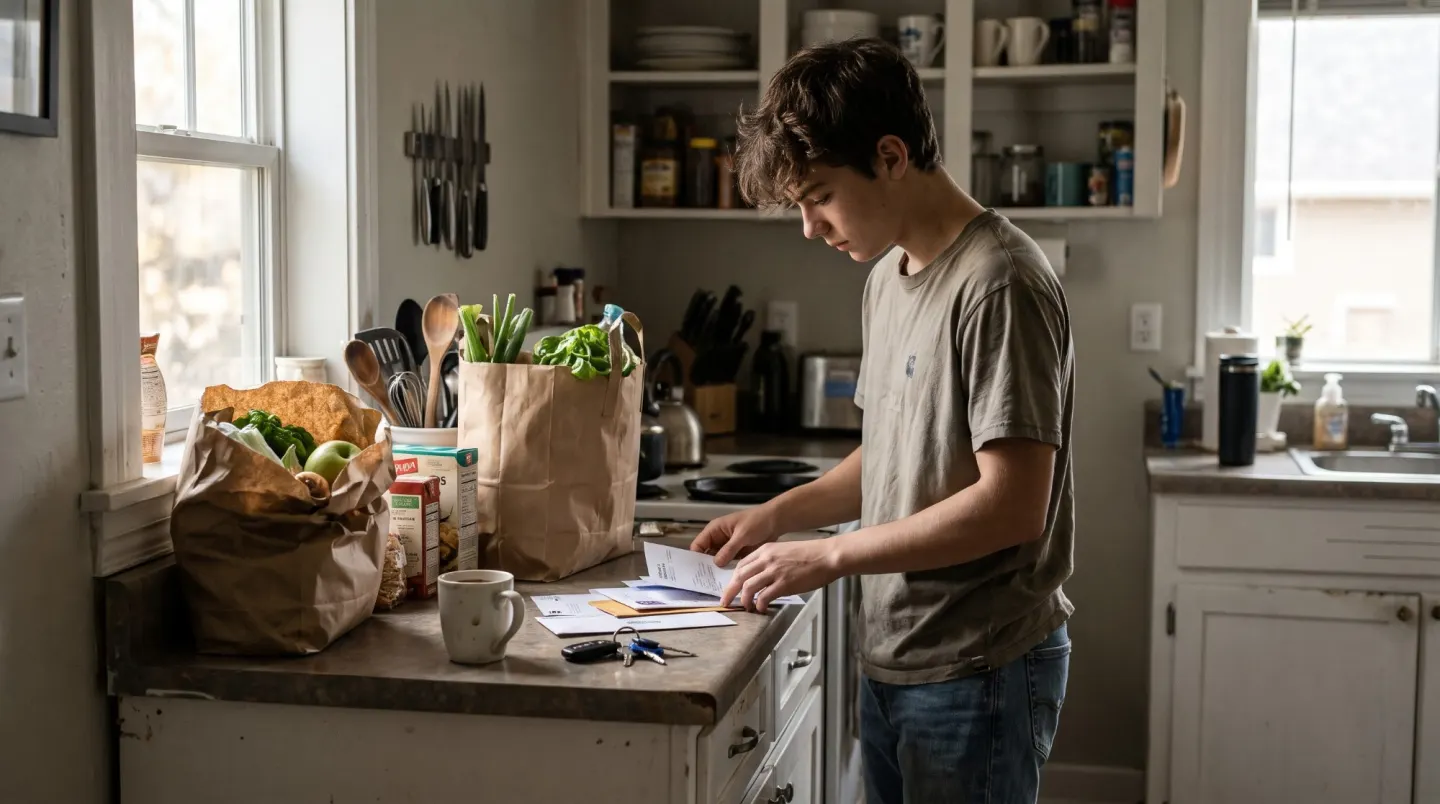
- Plan and cook five or six simple meals from start to finish.
- Shop with a list and a budget.
- Store leftovers safely and clean up as you go.
Around the home
- Do laundry, including reading care labels and treating a stain.
- Clean a bathroom and a kitchen properly.
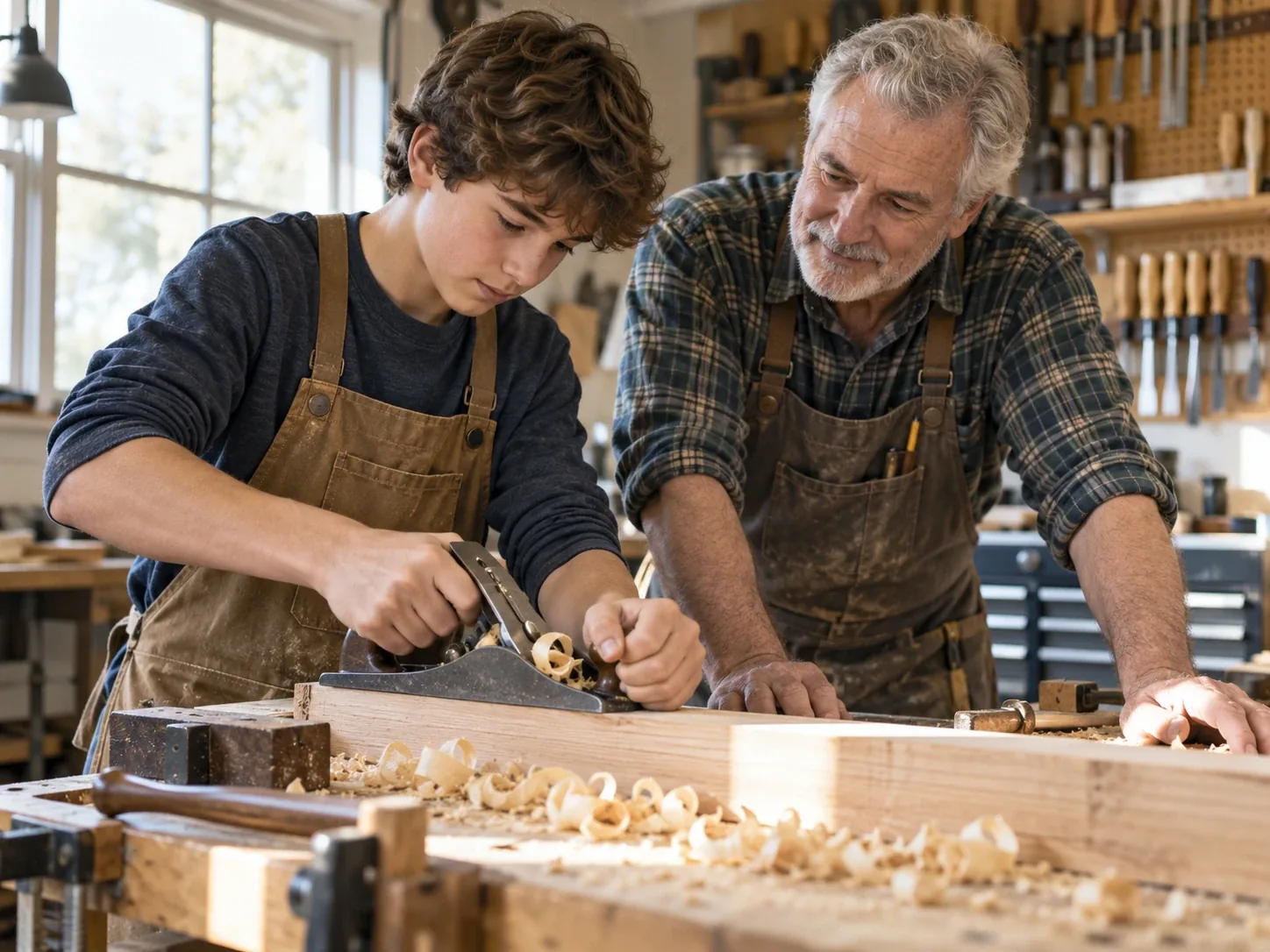
- Fix small things: unclog a drain, reset a breaker, change a light bulb, tighten a loose screw.
Money
- Keep a simple budget for a month.
- Use a bank account and a debit card responsibly.
- Understand what credit is, and why borrowing costs money.
- Read a bill or a paycheck and check it for mistakes.
Dealing with the world
- Make a phone call to book an appointment or ask a question.
- Fill out a form, write a polite email, and keep important documents safe.
- Get somewhere new using public transport or a map.
Looking after themselves
- Know when and how to see a doctor, and refill a prescription.
- Handle a minor injury or illness.
- Know whom to call in an emergency, and what to do if they feel unsafe.
How do we teach these over the years?
Think of it as a long staircase rather than a single leap. Young children begin with small pieces; teenagers take whole jobs.
- Young children can sort laundry by color, wipe the table, help measure ingredients and put away groceries.
- Children in the middle years can make a simple breakfast, run the washing machine with help, count change at the store and make a short phone call with a parent beside them.
- Young teenagers can cook one family dinner a week, do their own laundry, manage a small allowance and order at a counter on their own.
- Older teenagers can plan a week of meals, keep a simple budget, book their own appointments and handle a minor car or household fix.
If you want a fuller picture of tasks by age, age-appropriate chores lays them out stage by stage.
The pattern for teaching any skill is the same: you do it while they watch, then you do it together, then they do it while you watch, then they do it alone. Skipping straight to "do it alone" usually ends in frustration on both sides.
How do we hand over responsibility, not just tasks?
A task is "wash these clothes." A responsibility is "your laundry is yours now." The second one is what prepares a child for life.
When you hand something over, hand over the whole of it: the noticing, the planning and the doing. A teenager who owns their laundry decides when it needs doing, notices when the detergent runs out, and lives with the result if they forget. That last part matters. A week of wearing a slightly wrinkled shirt teaches more than a reminder ever could.
Mark the handover. Some families make it a small celebration: "You're becoming capable of more, so we trust you with more." A teenager given the family grocery budget for a week, with real trust, often rises to it in ways that surprise everyone. The growing up stages describe this kind of widening trust in more detail.
Be ready for mistakes. A burnt dinner or an overdrawn account is not a failure of the plan. It is the plan working, at home, where the stakes are low and someone kind is nearby.
What if my teenager is leaving soon and does not know much yet?
Breathe. You still have time, and panic will not help either of you. Pick the few skills that matter most for where they are going. For a dorm, laundry and basic money may come first. For an apartment, cooking and a little home repair.
Then make a short plan together. Ask your teenager what worries them most about living on their own; their answer is often the best place to start. Work on one skill each week or two, with practice built into ordinary family life: they cook Tuesday dinner, they handle the next pharmacy call, they plan the grocery run.
Remember too that young adults keep learning after they leave. Promise to be a phone call away for the questions they will have. Many grown children call home to ask how to cook something or what a bill means, and that is a sweet thing, not a sign you failed.