This is for parents who want their children outside, working with their hands and learning patience, and who suspect a shared family plot will end with one parent doing all the weeding. It covers why a bed of their own matters, what to plant, how to keep it going through the summer, and how to end the season well.
Why give each child their own bed?
A family garden that belongs to everyone often ends up belonging to no one. Children help on planting day, then drift away when the weeds come. The parent who wanted the garden finishes the season alone.
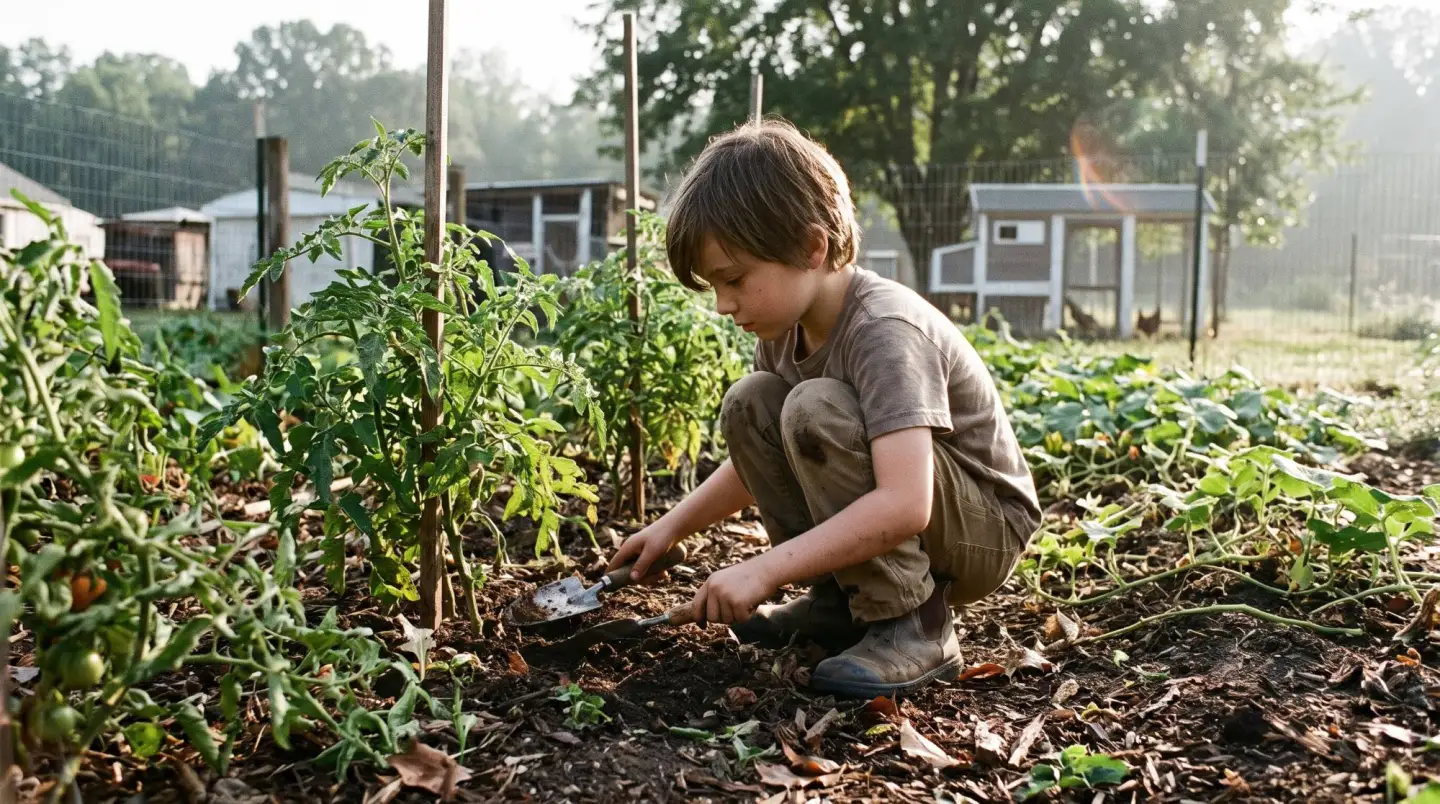
A bed of their own changes that. When a child can point to a patch of soil and say, "That's mine," they check it in the morning without being asked. They notice the first sprout. They worry when it hasn't rained. They are proud of a lopsided carrot in a way no store-bought vegetable could match.
This is stewardship: being trusted with something living that depends on you. Around eight, many children are ready for exactly this kind of first responsibility. Younger children can share a bed with a parent. Older ones can take on a larger section, or teach a younger sibling.
The size matters less than the ownership. A single large pot on a balcony can be a child's whole garden.
Each person is trusted with something that matters.
How do we start, and how small should we go?
Smaller than you think. A first family garden fails more often from ambition than neglect. A few practical steps:
- Find the sun. Most vegetables need at least six hours of sunlight a day, so watch your yard for a day before you dig.
- Keep beds small. For a young child, a bed they can reach across from one side is plenty. A raised bed or a large container is easier still.
- Start with good soil. Bagged garden soil or compost in a raised bed spares you a lot of frustration.
- Put it near the house. A garden by the back door gets visited. A garden at the far end of the yard gets forgotten.
- Make watering easy. A watering can sized for small hands, and a hose that reaches.
If you have no yard, look for a community garden plot, or grow in pots on a step or balcony. The lesson is the same.
What should children grow?
Choose plants that sprout quickly, forgive mistakes and end in something good to eat or look at. Let each child choose from a short list, so the bed feels like theirs.
Good choices for first gardens:
- Radishes: up in days, ready in a few weeks
- Snap peas: fun to pick and eat straight from the vine
- Cherry tomatoes: generous, sweet and easy to snack on
- Lettuce and salad greens: cut a few leaves, and they grow back
- Bush beans: sturdy, quick and plentiful
- Zucchini: almost impossible to fail, and enormous
- Sunflowers: tall enough to measure against, and loved by birds
- Pumpkins: a long wait, with a big reward in the fall
Mix one quick crop with one slow one. The radishes keep a child interested while the pumpkin takes its time.
How do we keep it going through the summer?
The first weeks are easy. The test comes in midsummer, when the weeds arrive, the weather turns hot and the novelty wears off. A rhythm carries you through.
Choose a regular garden time, such as a Saturday morning or a few minutes after dinner each evening, and go out together. Children who would never weed alone will happily weed beside you while you talk. Some of the best conversations happen with your hands busy and your eyes on the soil.
A few habits help:
- Water first thing. A morning check before breakfast becomes part of the day.
- Weed little and often. Ten minutes a few times a week beats a lost afternoon.
- Keep a simple garden journal. A notebook where each child draws or writes what they see: first sprout, first flower, first harvest.
- Let mistakes teach. If a bed dries out, ask, "What happened? What would you try next time?" Do not quietly water it for them every day.
When the garden wobbles, as it will, resist taking it back. A child who loses a crop and tries again has learned more than one who was rescued.
How do we bring it from the garden to the table?
The best part is the supper. When something is ready, let the child who grew it pick it, wash it and help prepare it. Put it on the table and say whose it is.
A bowl of salad from a nine-year-old's bed, served to grandparents, is a small celebration. Many families keep a harvest supper at the end of summer, where everything on the table came from the garden or a local farm. The children serve their own vegetables and tell the story of how they grew. It becomes something they remember for years, and something they want to repeat.
How do we end the season well?
When the frost comes or the beds are spent, close the season on purpose. Pull the old plants together, add compost and talk about what worked. Ask each child what they want to grow next year. Write their answers down and keep them for spring.
That small ritual turns a summer project into a yearly rhythm. Children come to expect it. Some will grow a bigger bed each year. Some will one day plant one of their own, at their own home, and remember why.