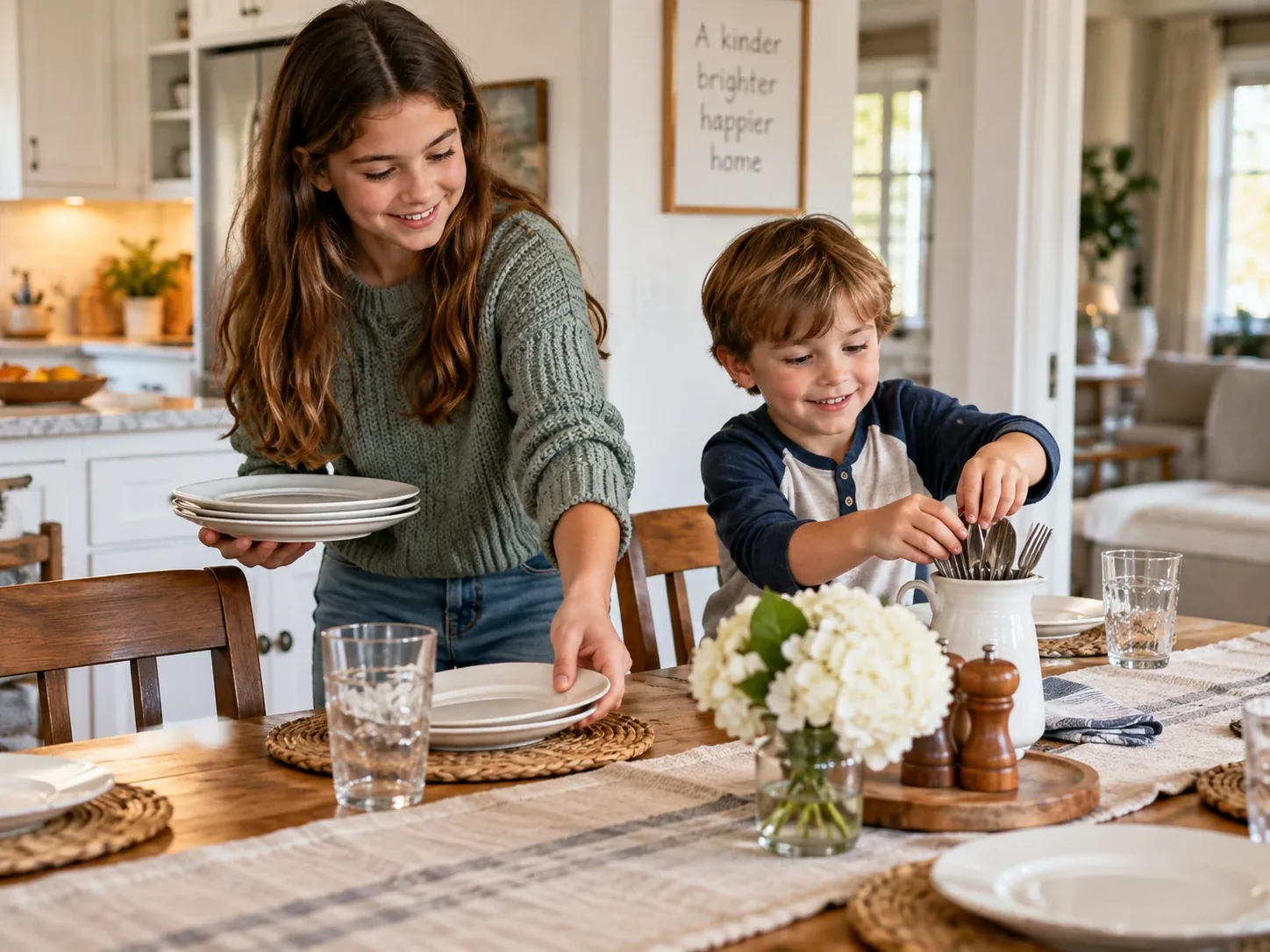
This is for parents who watch their children squabble and wonder whether they will even like each other in twenty years. It covers what draws siblings together, what pushes them apart, how to handle conflict so it builds trust rather than resentment, and how to keep the bond alive as they leave home.
What makes siblings close for life?
Siblings are often the longest relationships a person has. They outlast parents and usually predate spouses. But being raised in the same house does not guarantee closeness. Many adult siblings are polite strangers.
The ones who stay close tend to share three things:
- Shared work. They built, cooked, cleaned, hauled and fixed things together. Working side by side creates a partnership that play alone does not.
- Shared jokes and memories. They have stories only they understand, sayings that make them laugh, traditions that belong to them.
- Fair repair. They fought, as all siblings do, and learned to make it right. They trust each other because they know conflict does not end the relationship.
None of these happen by accident. Parents can set the conditions for all three.
How does shared work bring siblings together?
Children who only play together often compete. Children who work together learn to rely on each other. A brother and sister who clean out the garage on a Saturday morning, or plan and cook a family dinner, find out what the other is good at.
Give siblings jobs that need more than one pair of hands:
- Setting and clearing the table as a team
- A weekly dinner they plan and cook together
- A family project, like painting a fence or building a raised bed
- Washing the car together
- Caring for a pet or a garden plot in turns
Pair older and younger children on purpose. An older child teaching a younger one a skill builds patience in one and admiration in the other. Rotate the pairs so no one is always the helper or always the helped.
How do shared jokes and memories form?
Through repetition. The family stories, the songs on long drives, the running jokes at dinner, the traditions kept year after year. These become a private language siblings share for the rest of their lives.
Some ways to make room for them:
- Keep a few traditions only the children share, such as a sleepover in one room on the first night of summer or a yearly sibling outing.
- Tell family stories often, especially the funny ones where they feature together.
- Let them have secrets from you, within safe limits. A small conspiracy among siblings, like planning a parent's birthday surprise, binds them.
- Take trips and adventures together. Hard hikes, rained-out campouts and car breakdowns become the best stories later.
Repetition tells us who we are.
How should parents handle sibling fights?
Siblings fight. That is normal and even useful, because conflict is where they learn to disagree and come back together. What matters is how it ends.
When parents always act as judge, children learn to compete for the verdict. When parents teach repair, children learn to handle conflict themselves.
A simple pattern for repair:
- Calm down first. Separate them briefly if needed.
- Let each tell their side, without interruption.
- Each says what they need.
- Find a fix together. Let them suggest it.
- Make it right, with a sincere apology and some small act of kindness.
Practice it when everyone is calm, not only in the heat of a fight. Over time, children start doing it without you. That is the skill they will need as adults, when no parent is there to referee. For more, see how to help siblings resolve conflict peacefully.
What pushes siblings apart?
A few patterns quietly damage sibling bonds, often without parents noticing:
- Comparison. "Why can't you be more like your sister?" plants resentment that can last decades. Praise each child for who they are, not in contrast to another.
- Favoritism, real or perceived. Children watch closely for fairness. Fair does not mean identical, but each child needs to feel equally loved and seen.
- Fixed labels. "The smart one," "the athlete," "the difficult one." Labels can lock children into roles that set them against each other.
- No room to be themselves. Each child needs some space, time and friends that are their own. Closeness grows from secure individuals, not from forced togetherness.
Spend regular time alone with each child too. A child who feels secure in their own place with you is less likely to see a sibling as a rival.
How do we keep the bond alive after they leave home?
The habits you set now matter most when children grow up and scatter. A few things help siblings stay connected as adults:
- Keep family gatherings, such as a holiday weekend, a summer campout or a monthly dinner, so siblings have a regular reason to be together.
- Encourage them to reach out to each other directly, not only through you.
- Avoid becoming the go-between. If siblings have a disagreement, encourage them to talk to each other.
- Honor each sibling's spouse and family, so the circle widens rather than splits.
Parents who keep the doors of the family home open, and the rhythms going, give siblings a place to keep finding each other.