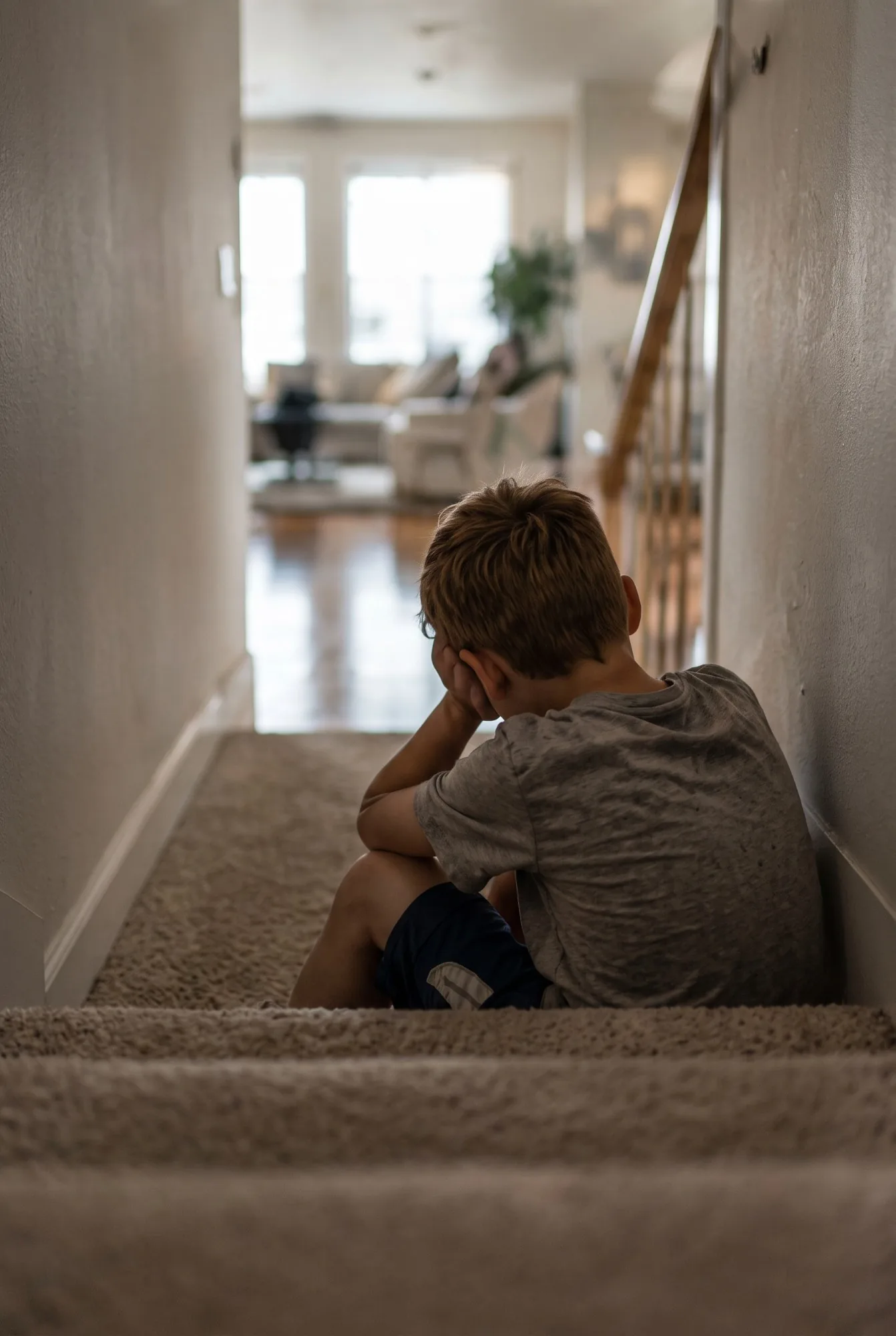
This is for parents who feel a quiet ache watching their children circle each other like strangers, or snipe at each other from morning to night. It covers why some siblings clash, what you can and cannot require, how shared work and shared fun help, and when the tension is something more serious.
Why don't some siblings get along?
Often it is nobody's fault. Children arrive with different temperaments. One is loud and the other needs quiet. One wants to play rough, the other wants to build something carefully. Put two very different people in the same house, sharing the same parents and the same bathroom, and friction is natural.
Age gaps matter too. A child close in age may feel like a constant rival. A child much older may feel saddled with a little one who wrecks everything. And sometimes a sibling simply reminds a child of everything they are not: the easy athlete beside the anxious reader, the charming one beside the shy one.
It helps to hear this plainly: children who don't like each other right now are not a sign that you failed. Many adults who were cool or hostile as children grew close later. What you do now shapes the soil that friendship might grow from.
Every person has a place, and knows they matter.
What can you require, and what can't you?
You cannot require affection. Telling a child to love their sister, or to stop being annoyed by their brother, rarely works and often makes them dig in. Feelings don't obey orders.
You can require behavior. A few house rules that hold for every child:
- No one is mocked, hit or shut out on purpose.
- Everyone is spoken to with basic respect, even when angry.
- Each person's belongings and space are respected.
- When someone is hurt, the one who hurt them helps make it right.
Say it simply: "You don't have to like each other right now. You do have to be kind." Children often relax when they hear this. It takes away the pressure to fake a feeling and gives them a line they can actually keep.
When fights break out, the aim is to teach repair rather than to referee every round. Helping siblings resolve conflict without refereeing covers that in detail.
How does shared work help siblings who don't click?
Working side by side gives children something to talk about other than each other. Two siblings who barely speak at dinner may chatter away while washing the car or making cookies. The task carries the conversation, and success belongs to both of them.
Choose jobs that genuinely need two people:
- Cooking one dinner a week together, with one chopping and one stirring.
- Folding a big basket of laundry, one sorting, one folding.
- Raking leaves into a pile and then, of course, jumping in it.
- Building something from a kit, with one reading the instructions and one holding the pieces.
Give them the job, step back and resist the urge to manage it. If they finish, thank them both. If they argue, help them find a way to divide the work fairly, then let them try again next week. The point is the repetition. Over months, a shared job becomes a small shared history.
How does shared fun help?
Children bond over laughter, and a parent can quietly set the stage for it. Look for activities neither child already owns, so nobody is the expert and nobody is the beginner. A new board game, a hike neither has done, a silly cooking challenge, a fort built from every blanket in the house.
Some families keep a standing sibling night, once a week or once a month, where the children choose something to do together and the parents simply provide snacks. Others take a pair of siblings on a short outing with one parent, without the rest of the family. A different setting often loosens old roles.
Inside jokes, nicknames and shared memories are the glue of sibling friendship. You cannot invent those for them, but you can give them enough time together, doing things that are actually fun, for those jokes to appear. Raising siblings who stay close as adults looks at that longer arc.
How do you make sure each child feels secure?
Much sibling hostility is really a worry about parents. Children who fear there is not enough love, attention or fairness to go around will fight over every scrap. Children who feel secure in their own place compete less.
A few things that help:
- Spend one-on-one time with each child. Even ten unhurried minutes, doing something they choose, tells a child they matter on their own.
- Avoid comparing. "Why can't you be more like your brother?" plants resentment that can last decades.
- Notice each child's strengths out loud. Let each one be known for something that is theirs.
- Be fair, not identical. A teenager and a toddler need different things. Explain that fairness means each person gets what they need.
When is it more than ordinary friction?
Most sibling dislike is ordinary and outgrown. Sometimes it is not. Take a closer look if one child is consistently the target, if there is physical harm or real fear, if one child seems frightened to be alone with another, or if the hostility includes cruelty that goes beyond normal squabbling.
In those cases, safety comes first. Supervise closely, separate children when needed, and seek help from a pediatrician, a school counselor or a family therapist. Smarkle is not a substitute for that help. A home can recover from these seasons, but it usually needs outside support to do so.