This is for parents who would love their children to grow up able to feed themselves and others, but who dread the mess, the time and the knives. It covers why cooking is worth teaching, what children can do at each stage, how to teach a skill so it sticks, how to keep the kitchen safe, and how to make cooking a rhythm rather than a one-off project.
Why teach children to cook at all?
Because it is one of the most useful things a person can know, and one of the most generous. A child who can cook can care for themselves when they leave home, and care for others long before then. Cooking teaches patience, planning, measuring, cleaning up and the satisfaction of making something people enjoy.
It also builds connection. Some of the best conversations happen beside a cutting board, when hands are busy and nobody has to make eye contact. A quiet child may talk more over a pot of soup than over any planned heart-to-heart.
And there is a deeper gift. When a child cooks for the family, they move from being cared for to caring. That shift, from receiving to contributing, is part of growing up.
What can children do at each age?
Every child is different, so treat these as rough stages, not deadlines. Move on when a child shows steady hands and good judgment, not because of a birthday.
Around two and three
- Wash fruit and vegetables in a bowl of water.
- Tear lettuce and herbs.
- Stir cold ingredients in a big bowl.
- Pour from a small pitcher, with spills expected.
- Carry unbreakable things to the table.
Around four and five
- Spread butter or jam with a blunt knife.
- Measure with cups and spoons.
- Crack eggs into a separate bowl, fishing out shells.
- Cut soft foods, like bananas or cooked potatoes, with a child-safe knife.
- Knead dough and shape cookies.
Around six to eight
- Read a simple recipe aloud and gather ingredients.
- Peel vegetables with a peeler.
- Use a small sharp knife with a proper grip, under close supervision.
- Make sandwiches, salads and simple cold breakfasts alone.
- Help at the stove with an adult right beside them.
Around nine to twelve
- Follow a recipe from start to finish.
- Use the stove and oven with an adult in the room.
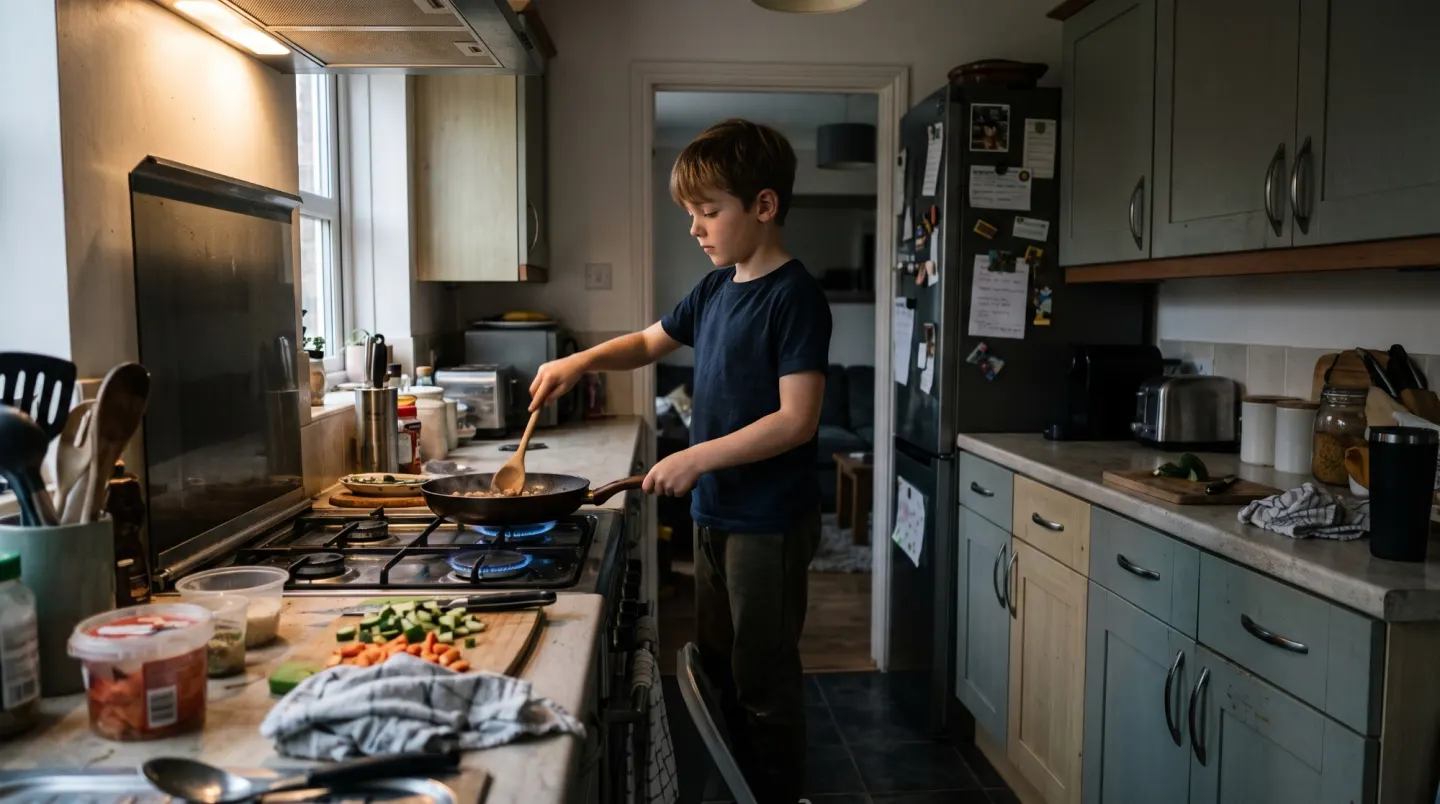
- Plan and cook one family meal a week, with help.
- Clean as they go and put leftovers away safely.
Teenagers
- Plan a week of meals and write the shopping list.
- Shop with a budget.
- Cook a full dinner without help.
- Adapt a recipe and invent their own.
A shy twelve-year-old who cooks the family dinner every Thursday is learning something no worksheet can teach.
You're becoming capable of more, so we trust you with more.
How do you teach a cooking skill so it sticks?
Use the same steps you would for any skill. First, the child watches you do it and you explain as you go. Next, you do it together. Then the child does it while you watch and help. Finally, they do it on their own, and you stay in the room or nearby.
Keep each lesson to one new skill. Cracking eggs one week, using a peeler the next. Repetition matters more than variety. A child who has made the same simple pancakes ten times knows far more than one who has made ten different dishes once.
Expect mess and slowness. If you are rushing to get dinner on the table, it is the wrong night to teach. Choose a weekend morning or a calm evening, and plan for everything to take twice as long. That is the cost of teaching, and it pays back for decades.
How do you keep the kitchen safe?
Start with clear, simple rules and repeat them often:
- Wash hands before cooking.
- Knives stay on the counter, pointing away, and are never handed blade first.
- Pot handles turn inward on the stove.
- Hot things are announced out loud.
- Raw meat stays separate, and hands are washed after touching it.
Teach knife skills early and properly. A child who learns the right grip and a slow, careful rhythm with a small sharp knife is often safer than one who flails with a dull one. Stay within arm's reach until you are sure.
For the stove and oven, add trust gradually. First, the child stirs while you stand beside them. Later, they cook while you are in the room. Only when judgment is steady do they cook alone. If a child is impulsive or easily distracted, it is fine to wait longer.
How do you make cooking a family rhythm?
Cooking skills grow fastest when they are part of the week rather than a special project. A few ideas families use:
- A weekly cooking night. Each child, in turn, plans and cooks one dinner with a parent's help. Older children can take a night of their own.
- A Saturday breakfast crew. Pancakes, eggs or porridge, made by the children while the adults set the table.
- A baking afternoon. Once a month, bake something to share with a neighbor or a grandparent.
- A family cookbook. Write down each recipe a child masters, with their name and the date it first worked.
Celebrate milestones. The first time a child cooks a whole meal for the family is worth marking, perhaps with a toast at the table. Age-appropriate chores shows how cooking fits beside the other jobs children take on as they grow.